
 how-to
Are Online Graphic Shirts Drop Shipped? A 2026 Guide
Table of Contents
- What Does Drop Shipping Actually Mean for Graphic Shirts?
- How Shirt Dropshipping Works: The Order-to-Delivery Journey
- Print-on-Demand vs. Stocked Inventory: What's the Difference?
- Print-on-Demand Shirt Quality: What You're Actually Getting
- Print-on-Demand Shipping Times: How Long Will It Really Take?
- Best Print-on-Demand T-Shirt Companies and What They Offer
- How to Tell If a Graphic Shirt Is Actually Drop Shipped
- Returns, Defects, and Customer Service Responsibility
- Why Some Sellers Choose Print-on-Demand Over Stocked Inventory
- Conclusion: Making an Informed Choice
- Frequently Asked Questions
Last Updated: October 5, 2026
What Does Drop Shipping Actually Mean for Graphic Shirts?
Drop shipping is a fulfillment model where a seller doesn't hold inventory. Instead, when a customer orders a product, the seller passes that order to a third-party supplier who prints and ships it directly to the buyer. For graphic shirts, this means the design exists only as a digital file until someone purchases it.
The key question: are online graphic shirts drop shipped? The short answer is yes, most graphic shirts sold online through independent sellers, Etsy shops, and small e-commerce stores use drop shipping or a similar print-on-demand model. The seller creates the design, lists it for sale, and a printing partner handles production and shipping.
This is fundamentally different from buying a pre-made shirt from a warehouse. With drop shipping, there's no pile of inventory gathering dust. The shirt is printed after the sale, customized to each order. That's the entire business model for most independent graphic shirt creators.
How Shirt Dropshipping Works: The Order-to-Delivery Journey
When you order a custom graphic shirt online, here's what actually happens behind the scenes.
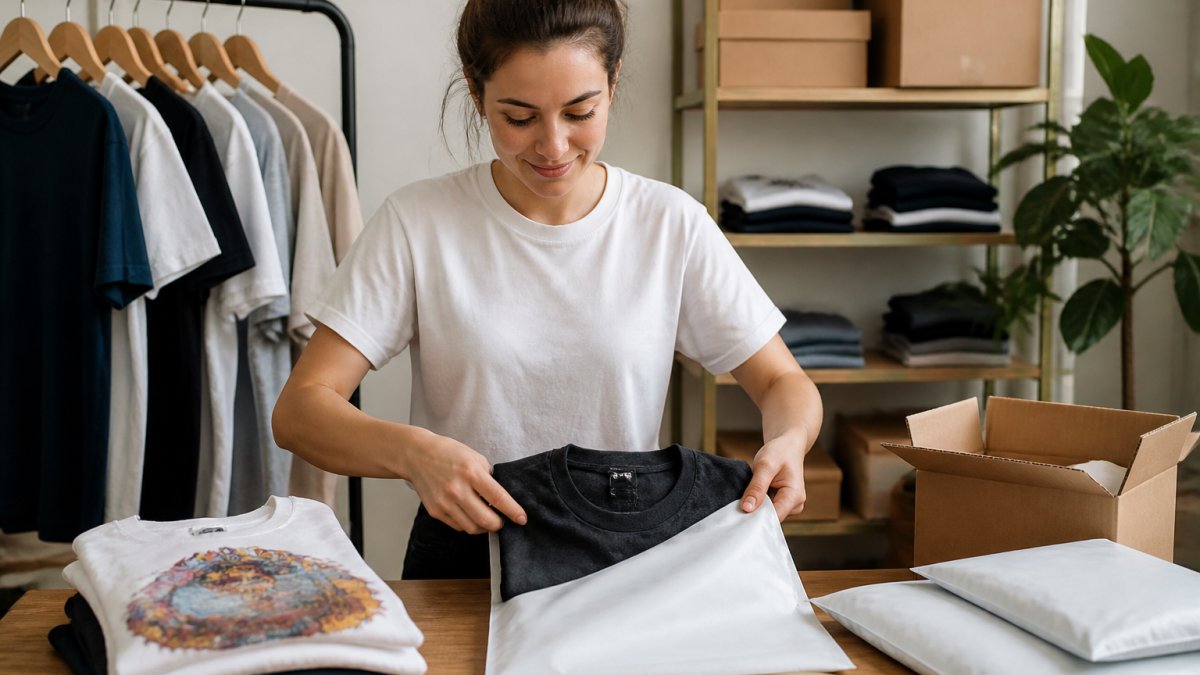
First, you place an order on an online store or marketplace. The seller receives your order and uploads your design file to their print partner's system. The printer receives the job, sources a blank shirt in your size and color, and prints your design using screen printing, direct-to-garment printing, or heat transfer, depending on their equipment and the design complexity.
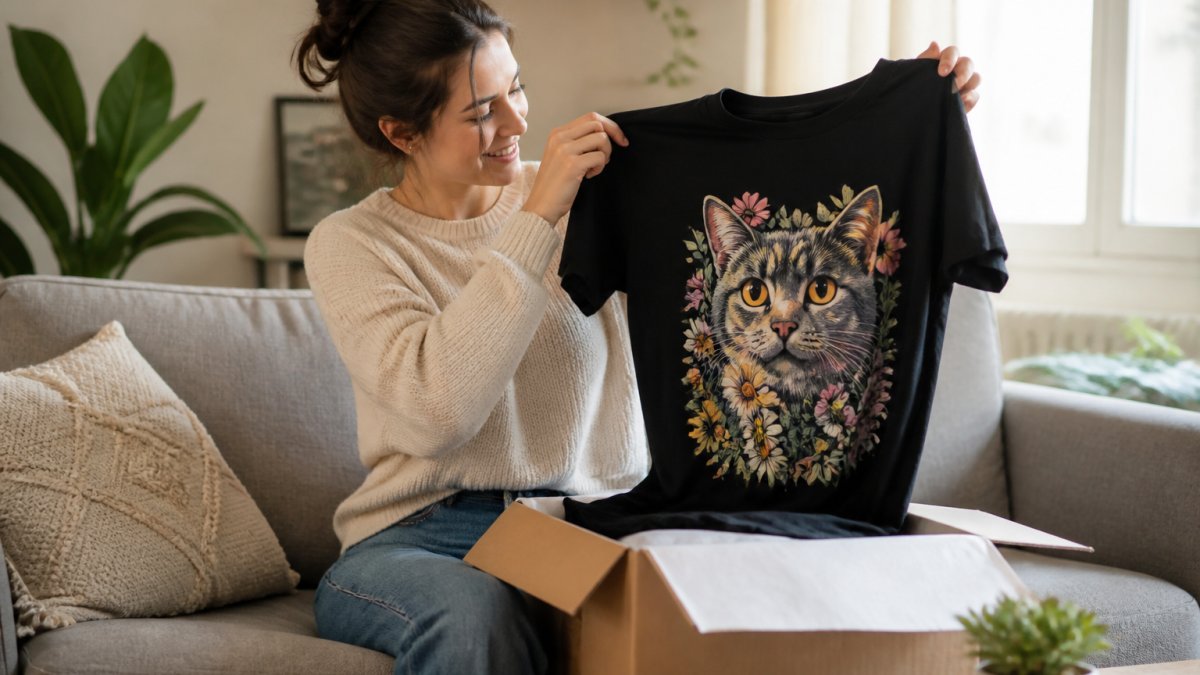
Once the shirt is printed and inspected, it goes into a shipping box with a label. The printer ships it directly to your address. You receive tracking information so you can monitor delivery. The entire process, from order to your doorstep, typically takes 5-14 business days, depending on the printer's location and your shipping speed selection.
The seller never touches the physical product. They handle design, customer service, and marketing. The printer handles production and logistics. This separation of roles is what makes drop shipping work for graphic shirts.
Print-on-Demand vs. Stocked Inventory: What's the Difference?
Print-on-demand and drop shipping are often used interchangeably, but there's a subtle distinction worth understanding.
Print-on-demand is the production method: the shirt is printed after purchase, in the exact quantity ordered. Drop shipping is the fulfillment method: a third party handles the entire process from production to delivery.
Most print-on-demand services operate as drop shipping partners. You design a shirt, upload it to their platform, set a price, and they handle everything else. When someone buys, they print one shirt and ship it. You never see inventory.
Stocked inventory is the opposite. A seller manufactures 500 shirts upfront, stores them in a warehouse, and ships from that stockpile. This requires capital, storage space, and forecasting. If a design doesn't sell, the unsold shirts become dead inventory.
Here's why this matters: print-on-demand eliminates inventory risk. A seller can offer 50 different graphic shirt designs without committing money to production. Stocked inventory requires betting on which designs will sell before making them.
For most independent graphic shirt sellers, print-on-demand is the only realistic option. The capital and risk of stocking are too high.
Print-on-Demand Shirt Quality: What You're Actually Getting
Quality is the biggest concern for buyers of online graphic shirts. Will the print fade? Will the garment feel cheap? Will the colors match what you see on screen?
The quality of a print-on-demand graphic shirt depends on several factors, none of which are inherent to the drop shipping model itself.
Garment quality varies widely. Some print-on-demand partners use premium 100% cotton blanks; others use lower-cost blends. The brand offering the shirt chooses which supplier to partner with. At YleaCreations, we prioritize garment quality because it directly affects how your design looks and feels when it arrives.
Print quality depends on the printing method. Direct-to-garment printing produces vibrant, detailed designs but works best on lighter colors. Screen printing produces durable, long-lasting prints and handles darker colors better. Heat transfer is quick and affordable but can feel stiff and peel over time.
Design file quality matters enormously. A low-resolution, poorly-optimized design will look blurry or pixelated no matter which printer handles it. The seller controls this, it's not a drop shipping problem, it's a design problem.
The honest truth: many online graphic shirts are low-quality because sellers prioritize speed and margin over garment and print quality. But drop shipping itself isn't the culprit. A seller using drop shipping can source premium blanks and work with a high-quality printer. A seller using stocked inventory can cut corners just as easily.
The question isn't whether the shirt is drop shipped. It's whether the seller chose quality partners.
Print-on-Demand Shipping Times: How Long Will It Really Take?
When you order a graphic shirt online, how long until it arrives?
Most print-on-demand graphic shirts take 7-14 business days from order to delivery. This includes production time (2-5 days) and shipping time (3-7 days depending on your location and shipping method).
Some factors speed this up:
- Expedited production options (pay extra, get printed in 1-2 days)
- Local printers (faster shipping if they're near you)
- Standard shipping within your region
Some factors slow it down:
- Complex designs requiring color separation or special techniques
- International orders (customs clearance adds 5-10 days)
- Seasonal demand spikes (holiday season can double production times)
- Cheaper shipping methods (ground vs. express)
Here's what to expect with standard shipping:
- Order placed: Day 1
- Design uploaded and approved: Day 1-2
- Printing: Days 2-5
- Quality check: Day 5
- Shipped: Day 6
- In transit: Days 6-12
- Delivery: Day 12-14
This is slower than buying a pre-made shirt from a warehouse. But it's the trade-off for customization and zero inventory risk.
Best Print-on-Demand T-Shirt Companies and What They Offer
Several major print-on-demand platforms power independent graphic shirt sellers. Understanding what each offers helps you evaluate where your shirt is being printed.
Printful focuses on high-quality blanks and multiple printing methods. They work with Shopify, Etsy, WooCommerce, and custom storefronts. Production typically takes 2-3 days, then 3-7 days shipping. Pricing is mid-range.
Merch by Amazon is Amazon's own print-on-demand service. You upload designs, Amazon handles everything, and you earn royalties. No upfront costs, but limited customization and lower margins for sellers.
Teespring (now Spring) offers print-on-demand with built-in marketing tools. They handle production and shipping. Good for sellers who want an all-in-one platform.
Redbubble is a marketplace where designers upload designs and Redbubble prints and ships them. You set your markup and earn the difference. No production control, but no inventory risk either.
Local printers in your area may offer print-on-demand for graphic shirts. Quality varies widely, but shipping is faster and you can inspect samples before going live.
The best print-on-demand partner depends on your priorities: speed, cost, customization, or integration with your existing store.
How to Tell If a Graphic Shirt Is Actually Drop Shipped
Most shoppers never get a straight answer to this. The listing says "made to order" or "ships in 5-10 business days," and that's it. Here is how to verify a seller's fulfillment claims using information that is already public on the product page, the shipping policy, and the order confirmation.
1. Read the production estimate, not just the shipping estimate. A stocked seller ships in 1-3 business days because the shirt is already in a bin. A drop-shipped or print-on-demand shirt usually shows a separate production window (often 2-5 business days) before the shipping window begins. If the product page lists only one combined timeframe with no production line, that is a signal the shirt is made after the order.
2. Check the shipping origin and the tracking path. On a drop-shipped order, the tracking often starts at a fulfillment facility rather than the seller's stated location. If the seller is based in one region but the package originates from a large third-party print facility in another, that is normal for print-on-demand and worth knowing before you buy.
3. Look for size and color availability patterns. Stocked inventory runs out. Drop-shipped and print-on-demand shirts rarely show "only 2 left" because nothing is pre-made. If every size and color stays permanently available across dozens of designs, the seller is almost certainly not holding stock.
4. Check the return and defect language. Sellers who fulfill through a print partner usually route defect claims back through that partner. Their policy will mention photos of the defect, a claim window, and a reprint rather than a simple refund. That language is a reliable tell.
5. Ask directly and watch the answer. A transparent seller will say "we print through a fulfillment partner" or "our shirts are made to order." A vague answer like "we ship fast" without specifics is a yellow flag. You can also check whether the seller publishes a sizing chart with garment measurements, since print-on-demand sellers who care about fit almost always do.
6. Use the order confirmation as a test. After checkout, a drop-shipped order often generates a second notification when the print partner accepts the job. A stocked order usually goes straight to a pick-and-pack confirmation. Neither is bad, but the pattern tells you which model you bought into.
None of these checks require special tools. They require reading the page the seller already published. If a seller hides the production window, the shipping origin, or the defect process, that is the real warning sign, not the drop shipping itself.
At YleaCreations, we make the fulfillment path clear on every listing so you know what you are ordering and when it will arrive. You can browse our current graphic shirt designs and see the production and shipping details up front: Shop on Etsy.
Returns, Defects, and Customer Service Responsibility
This is the part of drop shipping that most articles skip, and it is the part buyers actually need. When a graphic shirt is printed and shipped by a third party, the seller and the printer split the work, but you should never have to chase the printer yourself. Here is how the responsibility chain actually works.
Who you contact first. Always the seller. The seller is your point of contact for every issue, including defects, wrong items, and missing packages. The seller then files a claim with the print partner. If a seller tells you to contact the printer directly, that is a customer-service red flag.
What counts as a defect. Common approved claims include misprinted designs, wrong garment color or size shipped, damaged items, and shirts that arrive with the print peeling or cracked out of the package. Print placement that is noticeably off-center or crooked also usually qualifies. Normal variation in color between your screen and the printed shirt does not qualify, because screen colors and fabric inks never match exactly.
What you need to document. Most claim processes ask for a photo of the entire shirt, a close-up of the defect, and a photo of the packing slip or tag. Take these before you wash or wear the item. Claims filed after washing are frequently denied because the defect can no longer be verified.
Typical timelines. A defect claim usually moves through three stages: you submit photos to the seller, the seller files with the printer, and the printer approves a reprint or refund. A common pattern is 2-3 weeks from first contact to resolution, with reprints shipping on the printer's standard production schedule. That is slower than a normal return, which is why many sellers ask for photos first instead of a return shipment.
Returns versus reprints. For a defect, a reprint is often faster and cheaper than a return, so many sellers default to that. For a change of mind or a wrong size ordered by the buyer, most print-on-demand sellers do not accept returns, because the shirt was made specifically for that order and cannot be resold. Check the policy before buying, not after.
Sizing and fit. Fit issues are usually the buyer's responsibility. That is why a detailed sizing chart with chest width and body length measurements matters more on a made-to-order shirt than on a stocked one. If the chart is missing, ask before you order.
Chargebacks and disputes. If a seller will not resolve a legitimate defect, your payment provider's dispute process is the backstop. Keep your order confirmation, the listing photos, and your correspondence. Most disputes are decided on documentation, not on who is louder.
What good sellers do. They publish a clear defect policy, respond within a day or two, ask for photos up front, and tell you whether you are getting a reprint or a refund. That transparency is the difference between a frustrating drop-shipped order and a smooth one.
At YleaCreations, every order includes clear defect and sizing guidance, and we handle the claim with our print partner on your behalf so you are not stuck in the middle. If something arrives wrong, contact us first and we will make it right. You can review our policies and current designs here: Shop on Etsy.
Why Some Sellers Choose Print-on-Demand Over Stocked Inventory
Why would anyone choose print-on-demand if it's slower and more complicated than stocking inventory?
Zero inventory risk. A seller doesn't lose money on designs that don't sell. No dead stock, no storage costs, no waste.
Low startup capital. You don't need thousands of dollars to manufacture and warehouse inventory. You need design skills and a platform.
Flexibility. You can test designs quickly. If one doesn't sell, you remove it. If one sells well, you keep it. No long lead times for reorders.
Scalability. As orders increase, the printer scales production. You don't need to hire staff or expand warehouses. The printer handles growth.
Design focus. Sellers can focus on what they're good at: creating designs and marketing. The printer handles the operational complexity.
Sustainability. Nothing is manufactured until it's sold. No overproduction, no waste.
For most independent graphic shirt creators, print-on-demand is the only viable model. The economics of stocking inventory require either significant capital or proven sales volume.
Conclusion: Making an Informed Choice
Are online graphic shirts drop shipped? Most are. The question is whether that matters.
Drop shipping itself isn't good or bad. It's a fulfillment method that works well for customized, design-driven products like graphic shirts. The real quality markers are the seller's choices: which printer they partner with, which blanks they source, how carefully they optimize designs, and what customer service they provide.
When you shop for graphic shirts online, look beyond the drop shipping label. Check reviews, examine sizing charts, ask about production timelines, and verify return policies. At YleaCreations, we focus on sourcing quality blanks and working with reliable printers because we know you're buying a shirt that represents who you are, not just a generic product.
Ready to find graphic shirts that actually match your style and values? Shop on Etsy and explore designs that celebrate what makes you unique.
Key Takeaways:
- Most online graphic shirts use print-on-demand or drop shipping fulfillment
- Print-on-demand means the shirt is made after you order it, not pulled from warehouse stock
- Quality depends on the seller's choices (printer, blanks, design optimization), not the drop shipping model itself
- Shipping typically takes 7-14 business days for print-on-demand graphic shirts
- Long shipping times, no inventory limits, and design customization are signs of print-on-demand
- Returns and defects are the seller's responsibility; they work with the printer to resolve issues
- Print-on-demand works for independent sellers because it eliminates inventory risk and startup costs
| Fulfillment Method | Production Time | Shipping Time | Inventory Risk | Startup Cost |
|---|---|---|---|---|
| Print-on-Demand | 2-5 days | 3-7 days | None | Low |
| Stocked Inventory | None (pre-made) | 1-3 days | High | High |
| Drop Shipping | 2-5 days | 3-7 days | None | Low |
Frequently Asked Questions
Are online graphic shirts usually drop shipped?
Many online graphic shirts are drop shipped through print-on-demand fulfillment, but not all. Drop-shipped graphic shirts are printed and shipped only after you order, rather than held in warehouse inventory. This model is common on marketplaces and independent storefronts because it eliminates upfront inventory costs. However, some sellers stock popular designs and ship them faster. Check the seller's product description or shipping timeline to determine their fulfillment method.
How does print-on-demand shirt dropshipping work?
When you order a drop-shipped graphic shirt, the seller sends your order details to a third-party printer or fulfillment network. That provider prints your design onto the shirt, quality-checks it, and ships it directly to your address. The seller never handles the physical product. This process typically takes 5-14 business days from order to delivery, depending on the provider and shipping method chosen.
Can you tell whether a graphic shirt is made to order?
Yes. Look for these signals: shipping times listed as 5-14+ business days (not 1-2 days), product descriptions mentioning 'print-on-demand' or 'made to order,' and sellers who offer unlimited design customization. Ready-to-ship stocked merchandise usually ships within 1-3 business days. Check customer reviews for mentions of production delays or printing quality. If the seller emphasizes design customization or offers hundreds of variations, it's likely made to order.
What should you check before ordering a graphic shirt online?
Verify the seller's fulfillment method and estimated shipping time. Read customer reviews specifically mentioning color accuracy, print durability, and garment fit. Check the garment material (100% cotton vs. blends) and weight. Look at high-resolution product photos from multiple angles. Confirm the return policy, some drop-shipped items have limited returns.