
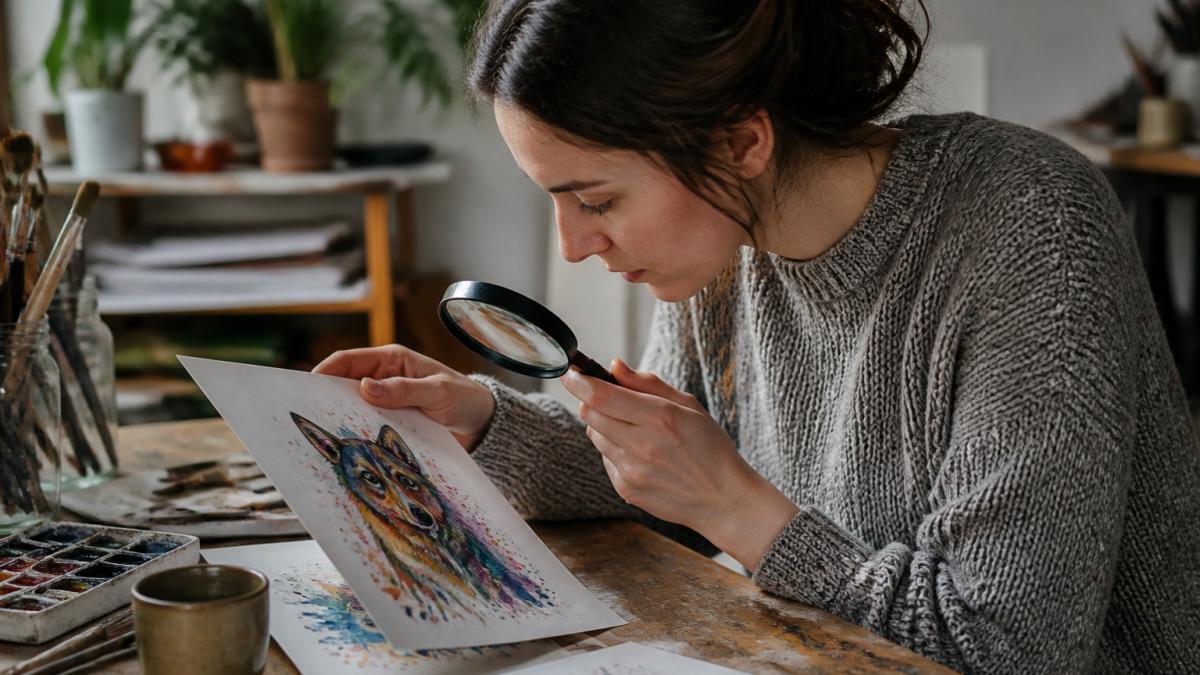
 how-to
How to Spot Authentic Artist Designs: A 2026 Guide
Table of Contents
- Why Spotting Authentic Artist Designs Matters
- Start with Reverse Image Search
- Identifying Original Artist Designs vs. Mass-Produced Reproductions
- Spotting AI-Generated Art in Clothing and Designs
- Verify Artist Authenticity Through Provenance and History
- Analyze Metadata and Digital Verification
- Contact the Artist Directly for Verification
- Understanding Copyright Infringement and Legal Recourse
- Finding Authentic Artist-Designed Apparel You Can Trust
- Frequently Asked Questions
Last Updated: September 30, 2026
Why Spotting Authentic Artist Designs Matters
Counterfeit artwork, mass-produced reproductions, and AI-generated pieces flood online marketplaces, undercutting authentic artists and misleading buyers. Learning how to spot authentic artist designs protects your wallet and supports creators who deserve credit. At YleaCreations, we believe authentic art matters, our curated collection celebrates independent creators and original designs.
Start with Reverse Image Search
Reverse image search is your first defense. Upload an image to Google Images, click the camera icon, and upload or paste the URL. Look for: the original source (artist's official website first), spread pattern (dozens of cheap reseller sites = red flag), and upload dates (earliest upload often belongs to the creator). This single step eliminates most counterfeits, stolen designs appear everywhere, while original designs cluster around the artist's own channels.
Identifying Original Artist Designs vs. Mass-Produced Reproductions
Original artwork differs fundamentally from mass-produced copies. Understanding these differences helps you spot authentic artist designs instantly.
Check for Limited Edition or Numbered Prints
Authentic artists create limited editions with numbered prints (e.g., "5 of 50"), while mass producers make unlimited quantities. Verify: certificate of authenticity, edition numbers on the piece, hand-signed vs. printed signatures, and publicly stated production limits. Contact the artist directly to confirm, legitimate creators track this information.
Evaluate Print Quality and Materials
Quality separates authentic pieces from cheap reproductions. Check: paper/fabric texture (substantial vs. flimsy), color vibrancy (rich vs. faded), print clarity (sharp vs. pixelated), ink consistency (even vs. pooling), and edge finishing (clean vs. rough). Request sample photos under natural light before purchasing, studio lighting hides quality issues.
Spotting AI-Generated Art in Clothing and Designs
Artificial intelligence now generates designs that fool casual observers. Learning to spot AI-generated art protects you from buying computer-generated pieces marketed as human-created work.
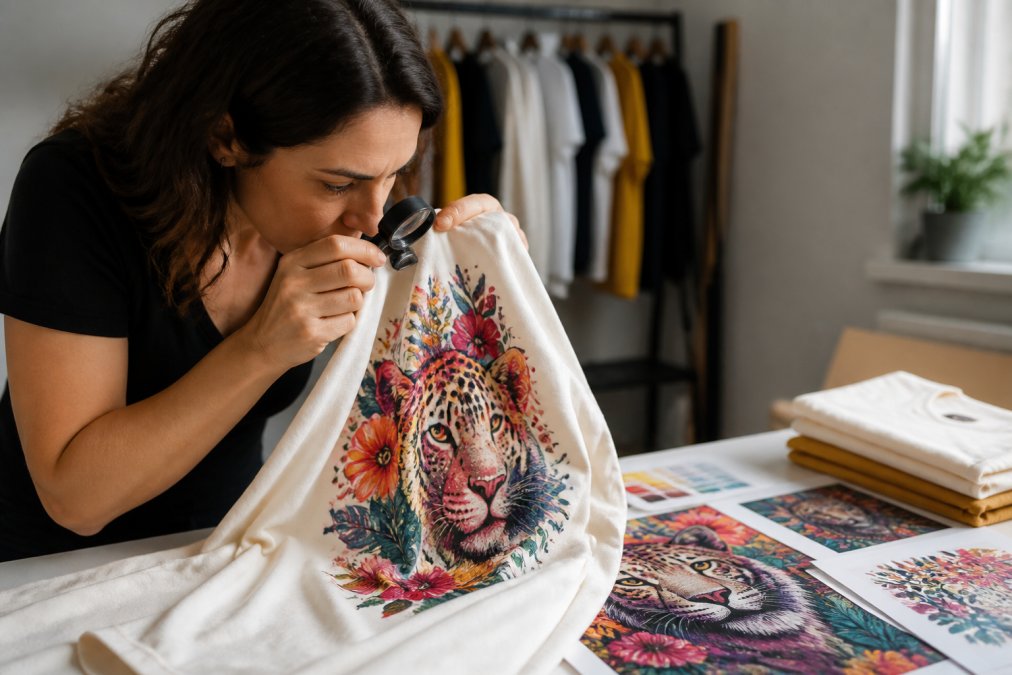
AI art has distinct patterns. Artists trained on thousands of images, so their outputs reflect common visual shortcuts. Real artists develop unique styles that break these patterns.
Visual Inconsistencies and Pixelation Patterns
AI struggles with consistency. Watch for: wrong finger counts or twisted joints, garbled text or misspelled words, misaligned symmetry (eyes at different heights), blended backgrounds, and pixelated or fuzzy edges. Compare to the artist's other work, real artists maintain consistency; AI-generated pieces show sudden style shifts or quality drops.
Anatomical and Detail Anomalies
Real artists understand anatomy; AI systems guess. Watch for: incorrect body proportions, asymmetrical facial features, wrong animal anatomy, fading object details, and contradictory lighting. Zoom in on high-resolution images, AI flaws become obvious at close inspection; real artwork holds up under magnification.
Verify Artist Authenticity Through Provenance and History
Provenance matters. It's the documented history of who created and owned artwork. Strong provenance proves authenticity.
Check Artist Signature and Markings
Authentic signatures are consistent across an artist's work. Compare signatures side by side, checking for: consistent style, consistent placement, legibility, and natural variation (hand-signed vs. printed). Forgers struggle to replicate signatures consistently.
Review Artist Portfolio and Social Media
Active artists maintain visible portfolios with regular social media posts, multiple platforms, and years of history. Verify: official website, active social media with follower engagement, consistent artistic style, accessible biography, and customer reviews. Counterfeiters rarely maintain authentic-looking online presence.
Analyze Metadata and Digital Verification
Digital files embed metadata, invisible information revealing creation date, software used, and edit history. Metadata catches AI-generated designs and stolen artwork that visual inspection alone might miss.
Understanding File Metadata Basics
Legitimate artists' files show: consistent creation dates matching claims, industry-standard software signatures (Photoshop, Procreate, etc.), reasonable edit counts (5-20 over weeks/months), and author information. AI-generated images show: generic/unfamiliar software, recent creation dates, rapid-fire edits in seconds, or stripped metadata. Mismatches between metadata and seller claims are red flags.
How to Extract and Read Metadata
Windows: Right-click image → Properties → Details tab → check "Date Created," "Date Modified," and software names. Mac: Right-click → Get Info → More Info section → check dates and "Kind." Online: Use free metadata viewers (Jeffrey's Image Metadata Viewer, Exif.tools, Verexif.com) to review EXIF, IPTC, and XMP data.
Interpreting Red Flags in Metadata
Red flags include: creation date mismatches (artist claims 2020, metadata shows 2024), software inconsistencies (claims Procreate but shows AI tool), stripped metadata combined with other red flags, and geolocation mismatches. Ask for clarification, legitimate artists can explain file transfers or re-exports.
Blockchain and Certificate-of-Authenticity Verification
Some artists now use blockchain-based certificates or NFT-style authentication to prove originality. While not foolproof, these tools add a layer of verification:
- What they are: Digital certificates that record when a design was created and who owns the copyright, stored on a decentralized ledger.
- How to verify: The artist provides a certificate number or blockchain address. You can look it up on the relevant platform (Ethereum, Polygon, or proprietary systems) to confirm the design's registration date and ownership.
- Limitations: Blockchain certificates prove registration, not quality or originality of the design itself. An artist can register a stolen design. But they create an auditable trail, if a design was registered in 2024, it wasn't made in 2020.
- Adoption: Blockchain verification is still niche. Most independent artists don't use it yet. Its presence is a plus, but its absence isn't a minus.
Cross-Referencing Metadata with Other Sources
Metadata is strongest when combined with other verification methods:
- Check the file's creation date against the artist's social media history. Did they post work around that time?
- Compare metadata across multiple pieces by the same artist. Do they show consistent software and date patterns?
- If metadata seems suspicious, use reverse image search to see if the image appears elsewhere online with an earlier date.
- Ask the artist directly: "Can you confirm this file was created in [date from metadata]?" Honest creators will verify or explain discrepancies.
Metadata alone doesn't prove authenticity, but it's a powerful filter that catches most AI-generated and stolen designs before you spend money.
Contact the Artist Directly for Verification
When in doubt, ask. Direct contact with the artist is the gold standard for verification.
How to reach out:
- Email: Most artists list contact information on their website or social media
- Direct message: Send a message through Instagram, Facebook, or their preferred platform
- Ask specific questions: "Did you create this design?" "What year did you make this?" "How many prints did you produce?"
- Request confirmation: Ask them to confirm the design's authenticity and production details
Real artists respond to inquiries. They're proud of their work and happy to verify it. If the "artist" doesn't respond or claims they don't recognize their own design, it's counterfeit.
Keep records of all correspondence. If you discover you bought a fake, this documentation helps with refunds or chargebacks.
Understanding Copyright Infringement and Legal Recourse
When someone sells a counterfeit design, they're stealing intellectual property. Copyright law protects original artwork automatically, and both artists and buyers have legal tools to fight counterfeits. Understanding your options helps you take action if you discover you've purchased fake art.
How Copyright Protects Original Designs
Copyright is automatic. The moment an artist creates an original design, copyright protection applies, no registration, no notice required. This means:
- The artist owns exclusive rights to reproduce, distribute, and display their work.
- Only the artist can authorize copies. Selling reproductions without permission is copyright infringement.
- Infringement is illegal regardless of whether the counterfeiter profits. Even "fan art" sold without permission violates copyright.
- Copyright lasts for the artist's lifetime plus 70 years (for works created after 1978 in the United States).
This protection applies to digital designs, printed artwork, and apparel designs equally.
Documenting Suspected Counterfeits
Before taking action, gather evidence. Documentation strengthens your case and helps platforms act faster:
- Screenshot the listing: Capture the product page, description, price, and seller name. Include the URL.
- Photograph the physical item: If you received it, take clear photos of the design, any labels, tags, and packaging.
- Save the artist's original work: Screenshot or download the original design from the artist's official website or social media, including the date posted.
- Record the timeline: Note when you purchased the counterfeit, when you received it, and when you discovered it was fake.
- Keep purchase receipts: Save order confirmations, payment records, and any messages with the seller.
- Compare side-by-side: Create a simple document showing the original design and the counterfeit version together. Differences (quality, color, details) strengthen your case.
Reporting to Online Marketplaces
Most platforms (Etsy, Amazon, eBay, Shopify, etc.) have intellectual property reporting systems. They take copyright violations seriously and often remove listings within 24-48 hours.
Steps to report on Etsy:
- Go to the counterfeit listing
- Click the three-dot menu ("More")
- Select "Report this item"
- Choose "Intellectual property infringement"
- Provide your documentation and explain why the design infringes
- Etsy reviews and typically removes the listing if valid
Steps to report on Amazon:
- Find the product page
- Click "Report infringement" (usually at the bottom of the page)
- Select the type of infringement (copyright)
- Upload evidence and describe the violation
- Amazon investigates; removal typically takes 5-10 business days
Steps to report on eBay:
- Go to the listing
- Click "Report item"
- Select "Intellectual property infringement"
- Provide details and evidence
- eBay's Verified Rights Owner (VeRO) program processes claims
Most platforms don't require you to be the copyright holder to report. If you're reporting on behalf of an artist, include their contact information and permission to act.
Filing a DMCA Takedown Notice
If a seller ignores platform reports or operates outside major marketplaces (personal website, Shopify store, etc.), you can file a formal DMCA takedown notice. DMCA stands for the Digital Millennium Copyright Act, a federal law that requires online service providers to remove infringing content when properly notified.
What a DMCA notice does:
- Forces the website host to remove the infringing content
- Creates a legal record of the infringement
- Can result in the seller's account being suspended or terminated
- Protects the person filing from liability if the notice is valid
How to file a DMCA notice:
- Identify the hosting provider: Use a WHOIS lookup tool (whois.com or similar) to find who hosts the website.
- Find the takedown contact: Most hosting providers list a copyright agent's email on their website. Search "[hosting provider name] DMCA agent" or check their terms of service.
- Draft the notice. Include:
- Your name, address, phone, and email
- Description of the copyrighted work (the original design)
- URL where the infringing content appears
- Statement that you have a good-faith belief the use is not authorized
- Statement under penalty of perjury that the information is accurate
- Your signature (digital signature acceptable)
- Send to the copyright agent via email or their designated method.
- Keep a copy for your records.
The hosting provider must respond within 10 business days. If valid, they remove the content and notify the website owner. The website owner can file a counter-notice if they believe the takedown was incorrect, but this is rare for clear counterfeits.
Template language for a DMCA notice:
"I am writing to notify you of copyright infringement on [website URL]. The original design '[Design Name]' was created by [Artist Name] and is displayed at [original source URL]. An unauthorized copy appears at [infringing URL]. The infringing content violates my copyright. I request immediate removal. I declare under penalty of perjury that this notice is accurate and I am authorized to act on behalf of the copyright holder."
For detailed guidance, the U.S. Copyright Office provides a DMCA notification template and FAQs.
Requesting Refunds and Chargebacks
If you purchased counterfeit art, you have consumer protection options:
Through the seller:
- Contact the seller with your evidence and request a refund
- Most legitimate sellers will refund immediately upon discovering the issue
- Counterfeiters often ignore refund requests
Through the platform:
- File a "Item Not as Described" or "Counterfeit" claim on Etsy, Amazon, eBay, etc.
- Provide your documentation
- Platforms typically side with buyers in counterfeit cases
- Refund processing takes 5-30 days depending on the platform
Through your payment processor:
- If the platform doesn't refund, contact your credit card company or PayPal
- File a chargeback or dispute, citing "Counterfeit Product" or "Item Not as Described"
- Provide screenshots and evidence
- Your bank typically investigates and refunds within 30-60 days
Contacting the Original Artist
If you discover your design is counterfeit, notify the artist immediately:
- Provide evidence: Send screenshots of the counterfeit listing and your purchase documentation.
- Include the URL: Make it easy for them to find and report the violation.
- Offer to help: Ask if they want you to file a DMCA notice or report to the platform.
- Request next steps: Ask how they're handling the infringement and whether they need additional information.
Most artists are grateful for the heads-up. Many will take action themselves or ask you to report on their behalf. Some may offer a refund or replacement if you purchased through them.
When you shop with YleaCreations, you're buying from a curated marketplace that actively protects original designs. Our commitment to authentic creators means every piece comes with confidence that you're supporting the actual artist behind the work.
Finding Authentic Artist-Designed Apparel You Can Trust
Authentic artist-designed apparel starts with verifying the creator. Support independent artists by purchasing directly from them or through platforms that vet sellers carefully.
Where to find genuine pieces:
- Artist websites: Direct from the creator eliminates middlemen and counterfeits
- Established artist platforms: Curated marketplaces that verify artist credentials
- Social media shops: Artists selling through Instagram or Facebook shops
- Art fairs and markets: In-person events where you meet creators face-to-face
- Specialty retailers: Shops like YleaCreations that curate authentic artist designs and celebrate independent creators
When shopping, ask sellers these questions:
- Who designed this piece?
- Can you provide the artist's contact information?
- Is this an original design or a licensed reproduction?
- What materials are used?
- Are there production limits?
YleaCreations specializes in authentic artist designs that celebrate individuality and creative expression. Our collection features pieces from independent creators who pour personality into every design. When you shop with us, you're supporting artists who care about their craft. Explore our vibrant world and find the perfect, expressive addition to your space or wardrobe. Shop on Etsy.
Spotting authentic artist designs requires attention to detail and healthy skepticism. Use reverse image search to trace origins. Examine physical quality. Watch for AI-generated patterns. Verify artist provenance through social media and direct contact. Check metadata and copyright status.
The effort pays off. Authentic pieces hold value. They support creators. They feel better because they're made with intention.
Ready to find authentic artist-designed apparel that feels like you? Explore YleaCreations and discover our curated collection of genuine, expressive designs that celebrate independent artists and your unique personality.
Frequently Asked Questions
How can reverse image search help me spot authentic artist designs?
Reverse image search lets you upload or search for an image online to find where it appears across the web. If a design shows up on multiple unrelated websites or mass-market retailers, it's likely a reproduction or stolen artwork rather than an original. Authentic artist designs typically appear first on the artist's official website, portfolio, or verified marketplace. This technique is one of the fastest ways to verify originality and identify copyright infringement.
What are the main signs of AI-generated art in apparel designs?
AI-generated art often shows anatomical inconsistencies (odd hand shapes, misaligned features), pixelation in fine details, and visual inconsistencies where patterns don't align naturally. Look for blurry or warped text, unnatural color gradients, and details that seem to shift when you look closely. Real artistic designs maintain visual consistency and intentional composition. These red flags help you distinguish between authentic artwork and machine-generated content masquerading as original art.
Why is it important to verify artist authenticity before buying?
Purchasing authentic artist-designed apparel supports independent creators and ensures you're getting quality, original work rather than mass-produced reproductions or stolen designs. Authentic pieces carry artistic integrity and often come with better craftsmanship. Supporting real artists also protects you from counterfeits and helps sustain creative communities. When you buy authentic, you're investing in genuine artistic expression rather than intellectual property theft.
What should I look for in an artist's signature or certificate of authenticity?
A genuine artist signature should be consistent across their work and match their official branding. Look for a certificate of authenticity that includes the artist's name, date, edition number (if limited), and contact information. The signature should be integral to the design, not an afterthought. Verify the artist's contact details and cross-reference them with their official website or social media. Authentic signatures are deliberate and professional, while counterfeit ones often look hastily added or inconsistent with the artist's other work.