 blog
Unique Expressive Art for Dog Lovers: 9 Colorful Styles
Table of Contents
- Why Unique Expressive Art for Dog Lovers Belongs in Your Home
- Colorful Dog Art: Bold Palettes That Transform a Room
- Whimsical Dog Art: Playful Personalities on Canvas
- Dog Portrait Art: Custom Pieces Built Around Your Dog's Look
- Abstract and Pop Art Dog Paintings for Modern Spaces
- Watercolor and Acrylic Dog Art: Choosing the Right Medium
- Unique Gifts for Dog Lovers: Art That Fits the Occasion
- How to Match Dog Artwork to Your Home Decor
- Conclusion: Finding the Expressive Piece That Feels Like You
- Frequently Asked Questions
Last Updated: October 15, 2026
Why Unique Expressive Art for Dog Lovers Belongs in Your Home
Unique expressive art for dog lovers is artwork that captures a dog's personality through bold color, playful shapes, and personal detail rather than realistic copying. At YleaCreations, we see it as a mood-lifting reminder of the animal you love. A plain wall becomes a conversation starter.
Here's the part most guides skip. The best pieces are not the most accurate ones. They are the ones that feel like your dog.
Below, we break down nine colorful styles, from rainbow portraits to abstract pop art. You will learn what each style does well, which rooms suit it, and how to pick a piece that feels like you. We also cover gifts, materials, and simple ways to match art to your decor.
Colorful Dog Art: Bold Palettes That Transform a Room
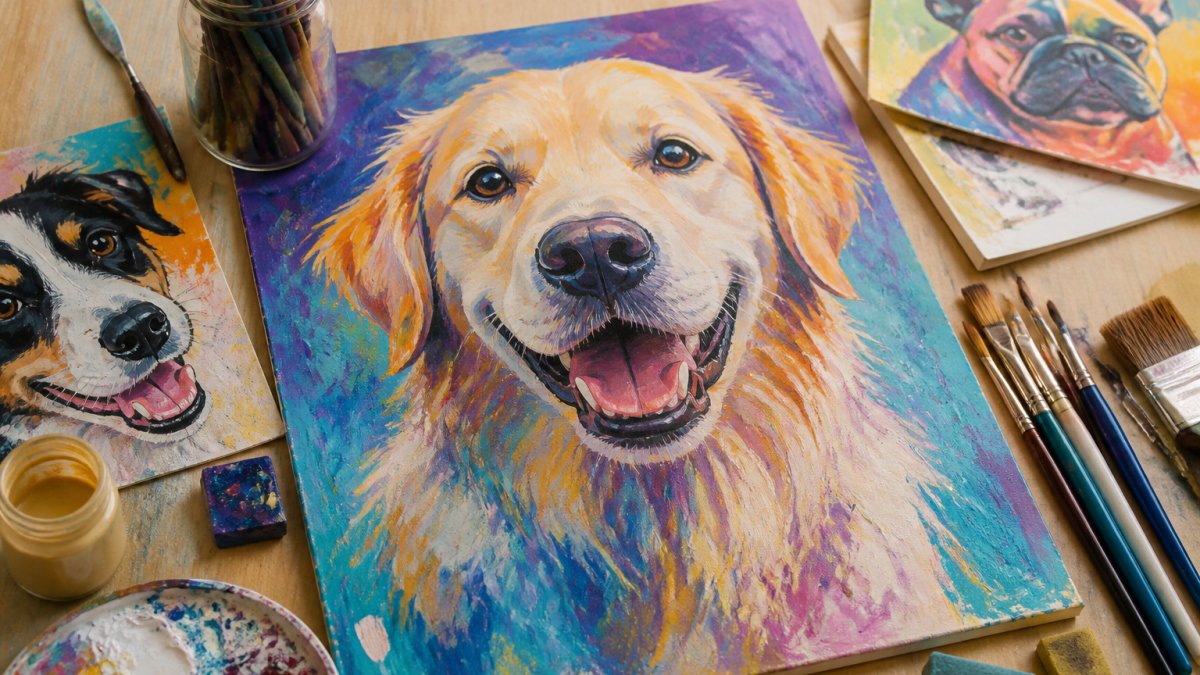
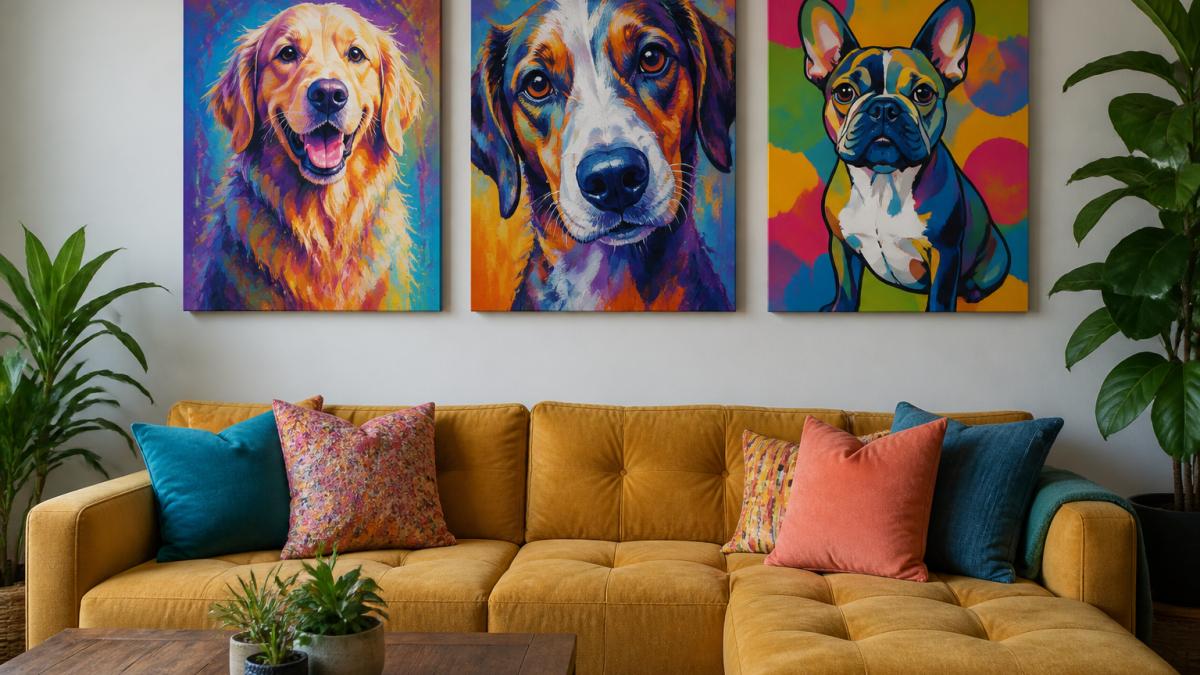
Colorful dog art uses saturated, high-contrast color to turn a dog portrait into a focal point. Think hot pink ears, teal shadows, and a mustard background behind a grinning face. The dog stays recognizable. The color does the rest.
A common mistake is hanging one small, timid piece on a huge blank wall. Big color needs big presence. Go larger than you think, or group three smaller pieces in a row.
Bright palettes also change how a room feels:
- Warm reds and oranges add energy to a dull corner
- Cool blues and greens calm a busy space
- Mixed brights suit creative, playful rooms
Whimsical Dog Art: Playful Personalities on Canvas
Whimsical dog art leans into humor and imagination. Long necks, oversized eyes, and silly poses turn a pet into a character. This style suits people who want a smile every time they walk past.
What most guides miss is the personality angle. A good whimsical piece should feel like your dog's specific brand of weird. Does your dog tilt its head at every sound? Does it steal socks? Those quirks belong in the art.
Our colorful animal art collection is built around exactly this idea. Playful, expressive pieces that celebrate the funny side of life with a dog. Many of our designs start with a real quirk, then push it further with color and exaggeration.
Whimsical styles work well in:
- Hallways and entryways where you pass by often
- Kids' rooms and play areas
- Home offices that need a mood boost
Dog Portrait Art: Custom Pieces Built Around Your Dog's Look
Dog portrait art is a custom piece designed around a specific dog's appearance and personality. Unlike a generic print, it starts with your dog: coat color, ear shape, markings, and the expressions you know best.
Personalization is where this style shines. Those details are what make a portrait feel alive.
Abstract and Pop Art Dog Paintings for Modern Spaces
Abstract and pop art dog paintings break the dog down into shapes, blocks, and patterns. An abstract piece might suggest a dog through curves and color alone. Pop art keeps the face clear but repeats it in a grid of bold, contrasting panels.
These styles fit modern rooms because they skip fine detail. They read as design first, dog second. That makes them easy to hang next to clean lines, neutral sofas, and metal or glass furniture.
Where they fall short: they can feel cold if your home is already full of sharp, minimal edges. Balance them with a soft throw, a plant, or warm wood.
Pop art also solves a common problem. If you love two very different color schemes, a four-panel pop art grid lets you use both without a clash.
Watercolor and Acrylic Dog Art: Choosing the Right Medium
Watercolor and acrylic are common mediums for expressive dog art, and they behave very differently on the wall and on the easel. Watercolor gives soft edges, blended color, and a light, airy feel. Acrylic gives thick texture, strong coverage, and colors that stay bold for years.
Watercolor: what it does well and what it demands
Watercolor is transparent. You build depth by layering thin washes, and the white of the paper does the work of highlights. That is why a good watercolor dog portrait looks luminous, the light is literally coming through the paint.
What you need to start:
- Paper: cold-press watercolor paper, 140 lb (300 gsm) or heavier. Anything lighter buckles when it gets wet. Cotton paper holds color better than wood pulp, but it costs more.
- Paint: a basic pan set with warm and cool versions of each primary is enough. You do not need 48 colors to paint a dog.
- Brushes: one round in a size 8-12 for washes, one round in a size 2-4 for detail, and one flat for edges.
- Extras: a board to tape the paper to, two jars of water, and a rag.
Watercolor punishes errors. You cannot easily paint over a mistake, you lift, blot, or start again. That makes it a poor first medium for most beginners, but a rewarding one once you understand how much water is on the brush.
Acrylic: the beginner-friendly option
Acrylic dries fast, covers mistakes, and sticks to almost anything. That combination makes it the practical starting point for most people who want to paint their own dog.
What you need to start:
- Surface: a stretched canvas, a canvas panel, or a gessoed wood board. Canvas panels are the cheapest way to practice.
- Paint: heavy-body acrylic in titanium white, a warm and cool red, a warm and cool blue, a warm and cool yellow, plus burnt umber and black. You can mix almost any dog coat from that set.
- Brushes: a few flats and rounds in small, medium, and large. Synthetic bristles are fine for acrylic.
- Extras: a spray bottle to keep paint workable, a palette (a paper plate works), and a cup of water.
Acrylic's fast dry time is both its strength and its trap. It lets you layer quickly, but it also means you cannot blend on the canvas the way you can with oil. Work in sections, keep the spray bottle handy, and build from dark to light.
Which medium for which look
Pick watercolor when you want:
- A gentle, dreamy look
- Lighter colors that fade into the wall
- A smaller piece for a quiet corner
- Visible paper texture as part of the design
Pick acrylic when you want:
- Strong, flat color that pops across a room
- Visible brush or palette-knife texture
- A statement piece that holds its own on a big wall
- A surface you can paint over if you change your mind
Prints vs. originals: what to check before you buy
If you are buying a print rather than an original, the paper matters as much as the image. A watercolor-style print on smooth glossy paper loses the softness that makes watercolor read as watercolor. Look for textured matte paper or canvas, and check whether the listing says giclée (pigment ink) or dye-based, pigment inks resist fading far longer.
If you want to paint your own
Start with acrylic on a canvas panel, work from a single clear reference photo, and give yourself permission to make three bad paintings before one good one. The most common beginner mistake is trying to paint every hair. Expressive dog art works because it leaves things out, pick the three features that make your dog recognizable (ear shape, eye expression, muzzle color) and let the rest be suggestion.
If painting is not your thing, our colorful animal art collection covers both watercolor-soft and acrylic-bold looks, so you can get the medium you want without picking up a brush.
Unique Gifts for Dog Lovers: Art That Fits the Occasion
Unique gifts for dog lovers work best when they match both the person and the moment. A bold print for a new puppy parent hits differently than a framed memorial piece for someone who recently lost a dog. The mistake most gift buyers make is shopping for their own taste instead of the recipient's, and the second mistake is buying generic dog art when the whole point is that the dog is specific.
Match the gift to the occasion
- New puppy: playful, whimsical art with bright color. The recipient is in the chaos phase, so humor lands better than sentiment.
- Adoption day: a custom portrait built from their photos. This is the one occasion where personalization is the entire gift.
- Birthday: apparel or a small print in the recipient's favorite palette. Small and wearable beats large and presumptuous.
- Housewarming: a larger canvas that fits their existing decor. Ask for a photo of the wall before you buy.
- Memorial: a calm, thoughtful portrait in softer tones. Avoid bright pop art here unless you know the recipient wants celebration over quiet.
- Just because: a small print or a mug. Low-stakes, high-frequency use.
The personalization checklist
Before you buy any dog-themed gift, gather four things:
- A clear photo of the dog. Face straight on, good light, no filter. If you are commissioning a custom piece, three to five photos is the standard ask.
- The dog's name and one quirk. The quirk is what makes the art feel like that dog and not a stock dog.
- The recipient's color palette. Look at their home, their clothes, their phone case. If everything is neutral, one bold piece is a gift. Five bold pieces is a problem.
- The wall or surface it will live on. A print for a specific wall needs a size. A mug or a tote does not.
What to avoid
- Breed-only art for a mixed-breed dog. If the dog is a rescue mix, a generic breed print misses the point. Custom or personality-driven art is the safer call.
- Memorial art as a surprise. Grief is personal. If you are not sure the recipient wants a memorial piece, ask or choose something else.
- Oversized art for a small space. A large canvas in a small apartment becomes a storage problem, not a gift.
- Matching sets in colors the recipient never wears. Apparel and art that clash with the recipient's palette will sit in a drawer.
Pairing art with apparel
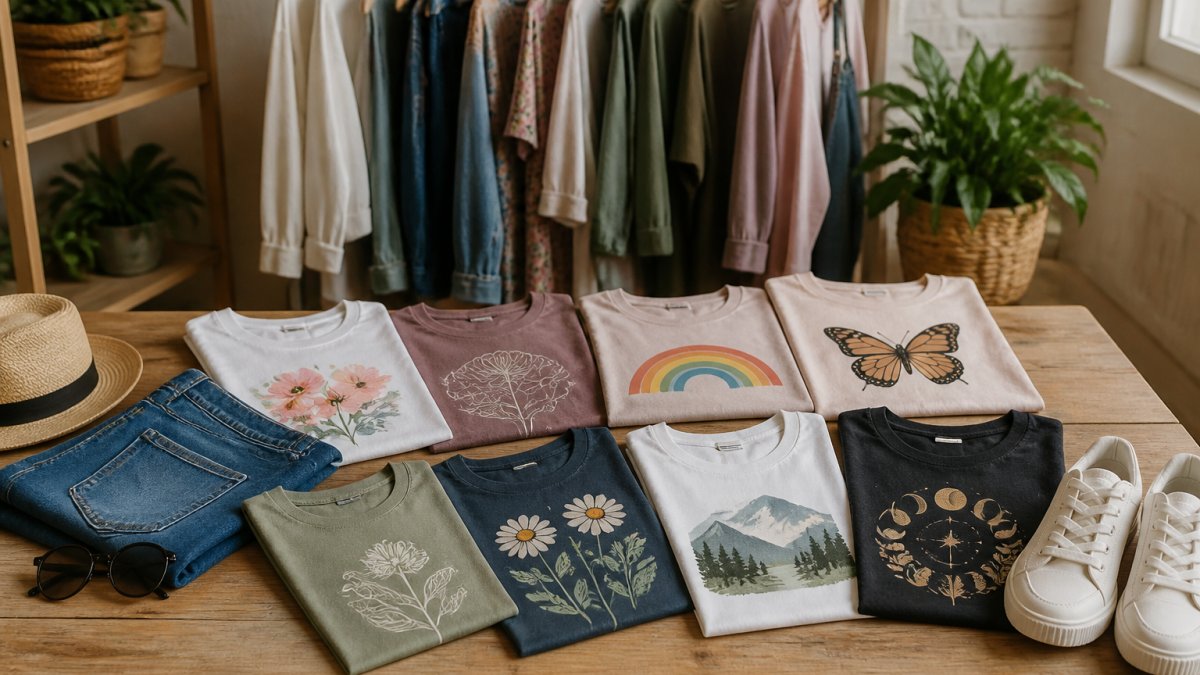
For an easy win, pair a print with a matching shirt. Our mood-lifting dog lover gifts include apparel and art designed to work together, so the gift feels complete rather than random. The pairing works because the recipient gets one piece for the wall and one for themselves, the same design, two ways to use it.
How to Match Dog Artwork to Your Home Decor
Matching dog artwork to your home comes down to three things: color, scale, and mood. Get those right and almost any style will work.
Start with color. Pull one or two colors from the room, such as a cushion, a rug, or a lamp, and look for art that repeats them. If the room is all neutral, choose one piece with strong color and let it be the only bright thing.
Then check scale. A large wall needs a large piece or a tight group of smaller ones. A narrow wall between two doors needs a tall, slim piece.
Finally, match the mood:
- Calm rooms: watercolor, soft abstract, muted palettes
- Playful rooms: whimsical, pop art, rainbow color
- Modern rooms: abstract, bold geometric shapes
- Traditional rooms: portrait style with warm, classic tones
Layout matters too. Hang art so the center sits at eye level. Leave at least a few inches between frames in a group. And step back before you commit to a nail hole.
Conclusion: Finding the Expressive Piece That Feels Like You
The hardest part of buying dog art is not finding something pretty. It is finding something that feels like your dog and fits your space at the same time. That takes a little thought about color, scale, and personality.
At YleaCreations, we build our collection around that idea. We offer colorful animal art, apparel, and pet accessories designed to reflect your personal style. Every piece is made to lift your mood and celebrate the animal you love. Browse our shop on Etsy and find the expressive piece that feels like you.
Frequently Asked Questions
What are some creative art ideas for dogs?
You can turn a favorite photo into a colorful dog painting, commission a whimsical dog art piece, or try a pop art style with bold blocks of color. Other options include abstract dog artwork built from your dog's actual color palette, watercolor portraits with soft washes, or an acrylic painting with patterned fur. Each style gives you a different way to celebrate your dog's personality.
How can I turn my dog photos into art?
Start with a clear, well-lit photo that shows your dog's face and any distinctive markings. Then choose a style that matches your taste: colorful dog art for bold statements, whimsical dog art for playful energy, or dog portrait art for a more traditional look. The best expressive art captures more than just appearance.
What styles of dog art make a room feel more expressive?
Pop art dog portraits with bright, saturated colors add instant energy to a space. Abstract dog artwork with loose brushstrokes and unexpected color combinations creates a modern, gallery-like feel. Whimsical dog art with exaggerated features and playful patterns works well in casual rooms. Colorful dog art in rainbow or neon palettes makes a strong statement in any room that needs a mood boost.
Can colorful dog art work in a minimalist room?
Yes. A single colorful dog painting becomes the focal point in a minimalist room, where neutral walls and clean lines let the artwork stand out. Choose one large piece rather than several small ones, and pick colors that echo one or two accents already in the room. A dog portrait art piece with a simple background and bold subject works especially well in this setting.