
 blog
blog
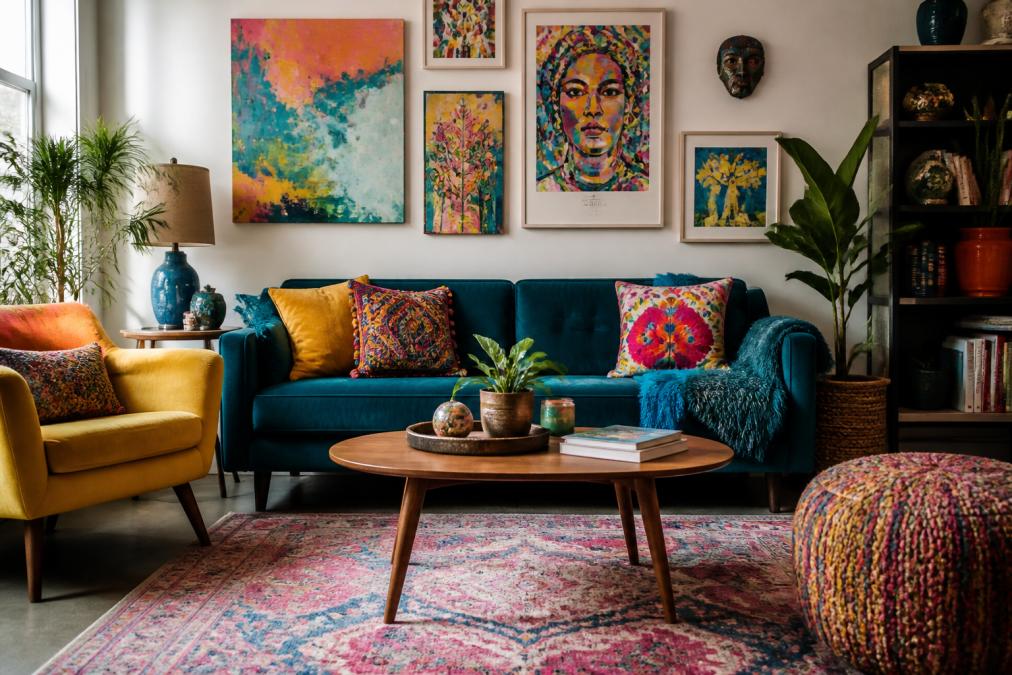
Colorful Home Decor for Expressive Personalities
Table of Contents
- The Psychology of Color in Interior Design
- Maximalist Home Decor Ideas
- How to Style a Colorful Living Room
- Color Theory for Non-Designers
- Budget-Friendly and Thrifted Expressive Decor
- Small-Space Expressive Design
- Whimsical Home Accessories
- Balancing Bold Colors with Neutrals
- Frequently Asked Questions
Last Updated: September 13, 2026
The Psychology of Color in Interior Design
Colorful home decor for expressive personalities starts with understanding that color is never neutral. It is a signal. A saturated orange wall tells guests you are warm before you say a word; a wall of mismatched pastel frames says you collect memories, not matching sets. At YleaCreations, we build our whole catalog around that idea: the room should sound like the person living in it.
Color psychology is the study of how hues influence mood, perception, and behavior in a space. Warm tones like red, orange, and yellow tend to energize a room and draw people together, which is why they work so well in kitchens and living areas. Cool tones like blue, green, and violet calm the nervous system, making them a natural fit for bedrooms and reading nooks.
The practical takeaway is simpler than the science: pick the feeling first, then the color.
Maximalist Home Decor Ideas
Maximalist home decor is the practice of layering color, pattern, texture, and objects until a room feels collected rather than decorated. It is not clutter. Done well, every piece has a reason to be there, and the density itself becomes the design.
Here is how to build a maximalist room without it turning into noise:
- Start with one anchor piece, such as a bold patterned rug or a saturated sofa, and pull three to five colors from it.
- Repeat those colors at different scales: a large wall piece, a medium cushion, a small ceramic.
- Add texture in every layer, from velvet to woven jute to glossy ceramic.
- Leave one surface mostly bare so the eye has somewhere to rest.
- Group objects in odd numbers, which reads as intentional rather than accidental.
The mistake most people make is buying everything at once. Maximalism rewards patience. A room assembled over two years looks richer than one ordered in a single afternoon, because the pieces actually reflect a life.
How to Style a Colorful Living Room
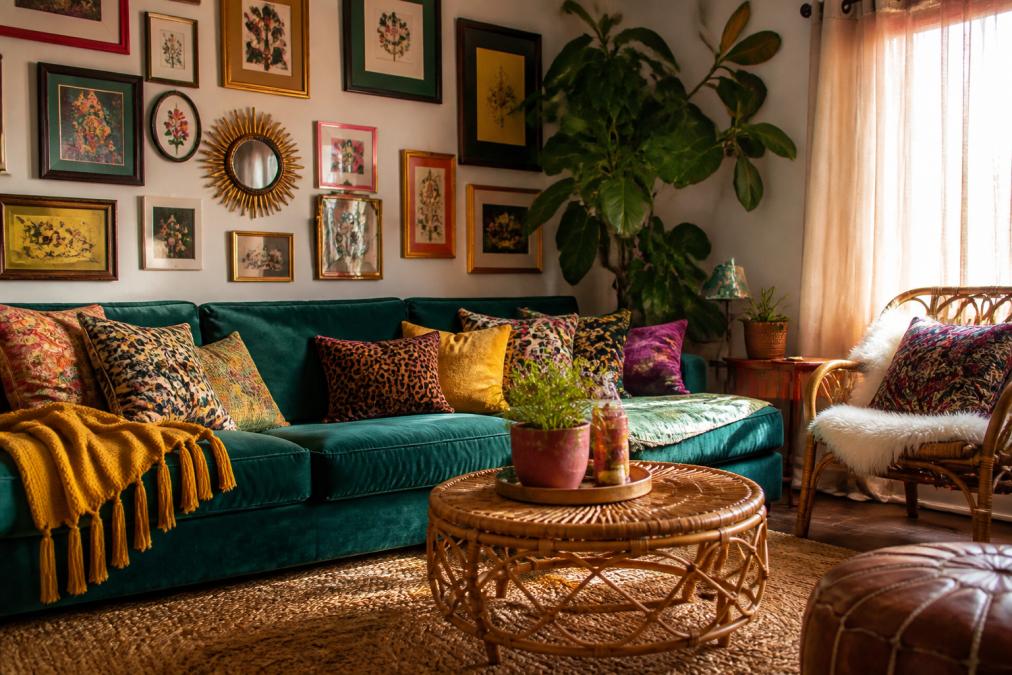
Start with the largest surface and work down. A colorful living room comes together fastest when the rug or sofa sets the palette, and everything else either echoes or deliberately clashes with it.
For a room that feels vibrant but not chaotic, use the 60-30-10 rule. Sixty percent of the room leans neutral, thirty percent carries your main color, and ten percent is a bold accent that surprises. Expressive personalities often want to flip that ratio, and you can, as long as you keep the neutral as a genuine anchor rather than an afterthought.
Three moves that work in almost any living room:
- Anchor with a neutral base: a warm off-white wall or a natural fiber rug.
- Layer two to three saturated colors through textiles, art, and small furniture.
- Add one whimsical focal point, such as a sculptural lamp or a bright animal-print cushion, and let it be the loudest thing in the room.
Color Theory for Non-Designers
You do not need a design degree to build a palette that works. Three relationships do most of the heavy lifting, and you can apply all of them with a paint chip fan and a phone camera.
A hue is the pure color itself, while a shade is that color darkened and a tone is that color muted with gray. Understanding that difference is what stops a palette from looking flat.
- Analogous: colors sitting next to each other on the wheel, like teal, green, and chartreuse. Calm, cohesive, hard to get wrong.
- Complementary: colors opposite each other, like orange and blue. High energy, best used in a 70-30 split rather than equal parts.
- Triadic: three colors evenly spaced, like red, yellow, and blue. Playful and bold, but you need a strong neutral to hold it together.
A simple test: photograph your intended palette together, then view the photo in grayscale. If the values read as distinct, the palette will work. If everything turns into the same gray mush, add contrast.
Budget-Friendly and Thrifted Expressive Decor
The most expressive rooms are rarely the most expensive ones. Thrift stores, estate sales, and online marketplaces are where personality actually lives, because you are choosing pieces nobody else on your block owns. But "shop secondhand" is not a strategy. Here is how to build a colorful, personality-driven room on a strict budget without sacrificing style or safety.
Set a monthly cap and buy one statement piece at a time. A common pattern among budget decorators is to allocate a fixed amount each month, say, the cost of a dinner out, and put it toward a single item that adds color or character. This forces you to be selective and prevents impulse buys that don't cohere.
Shop secondhand first for frames, ceramics, and textiles. These categories offer the highest style-per-dollar because they are small, easy to clean, and often undervalued. Look for solid wood frames (not particleboard), hand-thrown ceramics, and natural fiber textiles like wool or cotton. Avoid anything with a strong odor or visible mold.
Repaint or reupholster what you already own. A dated wooden chair becomes a statement piece with a coat of saturated lacquer. A plain lampshade gets new life with fabric paint or a stenciled pattern. Reupholstering a simple dining chair seat takes about an hour and a staple gun; re-covering a sofa is a bigger project but can be done with slipcovers if the frame is solid.
Use fabric dye on plain curtains or cushion covers. Rit Dye and similar products are widely available and cost a few dollars per packet. This is the cheapest way to introduce a bold hue to a large surface. Follow the package instructions for fiber content, natural fibers like cotton and linen take dye best; synthetics require a different formula.
Trade with friends who are also redecorating. Host a swap party where everyone brings three to five items they no longer love. You get new-to-you decor for free, and your friends do too. This works especially well for books, vases, and small art.
The one thing worth buying new is anything that touches your body daily, such as a sofa or mattress, where structural quality matters more than style. Everything visible on top of it can be found secondhand.
For renters, focus on removable updates: peel-and-stick wallpaper, temporary wall hooks, and large fabric hangings. These deliver color impact without permanent changes and come down cleanly when the lease ends.
At YleaCreations, we believe expressive decor should be accessible. Our colorful animal art, whimsical home pieces, and mood-lifting apparel are designed to add personality. Explore our shop to find pieces that make your space unmistakably yours.
Small-Space Expressive Design
Bold color works better in small rooms than most people assume, because a small space has fewer surfaces competing for attention. A studio apartment painted in a single confident color reads as intentional; the same color in a sprawling open floor plan can overwhelm.
Techniques that make small rooms feel bigger while staying expressive:
- Paint the ceiling the same color as the walls to blur the boundaries and lift the perceived height.
- Use one large-scale pattern instead of several small ones, since small prints add visual clutter in tight rooms.
- Choose furniture with visible legs so floor space shows through.
- Hang art higher than you think, close to the ceiling, to draw the eye upward.
- Keep one accent wall rather than four, and let the other three stay quiet.
Renters can get most of this effect without touching a wall. Peel-and-stick wallpaper, removable decals, and large fabric hangings deliver the same color impact and come down cleanly when the lease ends.
Whimsical Home Accessories
Whimsical home accessories are the small, unexpected objects that make a room feel alive: a ceramic animal figurine on a shelf, a lamp shaped like something absurd, a mismatched set of hand-painted mugs. They are the punctuation marks of a colorful room. But whimsy without intention reads as clutter, and most guides stop at "add quirky pieces" without explaining how to source, group, or scale them.
Start by choosing a theme that reflects your personality, not a trend. Animal lovers might build around a menagerie of ceramic creatures; travelers might cluster vintage postcards and foreign coins; bookworms might stack oversized faux books or literary-themed prints. The theme gives you a filter so you can say no to random cute objects that don't belong.
Sourcing whimsical pieces on a budget is easier than it sounds. Thrift stores, estate sales, and online marketplaces are goldmines for one-of-a-kind figurines, vintage lamps, and hand-painted ceramics. Look for pieces with a story: a chipped glaze, a hand-signed base, a color combination you have never seen. These imperfections are what make the object feel personal. For new pieces, independent artists on marketplaces like Etsy offer affordable, made-to-order whimsy that supports small creators.
Styling whimsy is about concentration, not distribution. Cluster your quirky pieces in one or two zones, such as a shelf of collected figurines or a gallery wall of playful prints, and let the rest of the room stay comparatively calm. Odd numbers (three, five, seven) read as intentional. Vary heights: a tall lamp, a medium figurine, a small trinket. Use a tray or a stack of books to corral small items so they don't look scattered.
Scale matters. A tiny figurine on a massive console table disappears; a large sculptural piece on a small side table overwhelms. Match the visual weight of the accessory to the surface. If you are unsure, photograph the arrangement and view it in grayscale, if the shapes read as balanced, you are on track.
For animal lovers, this is the easiest category to make personal. A shelf of dog-themed art, a bright pet portrait, or a set of animal-print cushions ties the room to the thing you actually love, and it never looks like a showroom because it could not belong to anyone else. At YleaCreations, our whimsical home pieces and colorful animal art are designed exactly for this kind of self-expression. Browse our collection to find the piece that makes your room unmistakably yours.
Balancing Bold Colors with Neutrals
Bold color needs a straight man. Without a neutral to play against, saturated hues lose their punch and the room turns into visual static.
The most reliable structure is to let neutrals carry the fixed, expensive elements, such as walls, flooring, and large furniture, while color lives in the layers you can change. That way your palette can evolve without a renovation.
A quick reference for how the balance shifts by room type:
| Room | Neutral Share | Color Share | Best Bold Move |
|---|---|---|---|
| Living room | 60% | 40% | Patterned rug or sofa |
| Bedroom | 70% | 30% | Painted accent wall |
| Kitchen | 65% | 35% | Colorful cabinet fronts |
| Home office | 55% | 45% | Gallery wall of bold prints |
| Entryway | 50% | 50% | Statement bench or runner |
Notice that the rooms you pass through quickly tolerate more color, while the rooms you rest in benefit from more calm. That pattern holds up across almost every home.
Expressing your personality through color takes nerve, and the hardest part is trusting that a room assembled around your own taste will look better than one copied from a catalog. YleaCreations exists for exactly that impulse. Our curated collection of colorful animal art, mood-lifting apparel, whimsical home pieces, and pet accessories is built for people who would rather their space sound like them than blend in. Every design is created to reflect personal character, not a trend cycle. Browse the shop and find the piece that finally makes a room feel like yours. Get started with YleaCreations and bring home something that looks like you.
Frequently Asked Questions
What is the 3-color rule in interior design?
The 3-color rule means choosing one dominant color for about 60% of a room, a secondary color for 30%, and an accent color for 10%. This balance keeps a colorful home decor scheme from feeling chaotic. For expressive personalities, pick a dominant hue you love, then add two supporting shades that share an undertone. The rule works in any size room and pairs well with maximalist home decor ideas when you repeat each color in textiles, art, and accessories.
How do I choose a color palette for an expressive home?
Start with one or two colors that genuinely lift your mood, then build a palette around them using a mood board. Pull paint chips, fabric swatches, and photos of rooms you love. Look for a common thread like warm vs cool tones. For colorful home decor for expressive personalities, don't chase trends; choose hues that feel like you. Test samples on a wall for a few days before committing, and add whimsical home accessories to tie the palette together.
How can I balance bold colors without overwhelming a small space?
In small spaces, limit bold hues to one accent wall or a few large pieces like a colorful rug or sofa. Keep the base neutral with white, cream, or light wood so the color pops without shrinking the room. Use vertical storage and mirrors to add depth. Layering textures in the same hue, such as velvet and linen, creates visual interest without adding visual weight. This approach lets colorful home decor for expressive personalities shine even in a studio apartment.
What are some examples of whimsical home decor styles?
Whimsical home decor includes animal-shaped planters, mismatched vintage frames, hand-painted ceramics, and prints with playful motifs. You might also see curved furniture, unexpected color combos like pink and orange, and collections of small oddities grouped on a shelf. The goal is to spark joy and show personality. Start with one or two pieces that make you smile, then build around them. Thrift stores and local artists are great sources for one-of-a-kind whimsical home accessories.