
 how-to
How to Find Mood Lifting Decor That Fits Your Style
Table of Contents
- Understanding Mood Lifting Decor and Its Impact
- The Psychology of Color in Interior Design
- How to Choose Colors for Mood Boosting Spaces
- Dopamine Decor Ideas for Every Room
- Incorporating Bold Colors, Patterns, and Textures
- The Role of Nostalgia and Personal Collections
- Bringing the Outdoors In with Biophilic Elements
- Finding Unique Gifts for Daydreamers and Creative Souls
- Shopping Smart: Quality, Authenticity, and Small Creators
- Frequently Asked Questions
Last Updated: September 23, 2026
Understanding Mood Lifting Decor and Its Impact
Mood lifting decor is the practice of intentionally choosing colors, textures, patterns, and objects that spark joy and boost your emotional well-being. It goes beyond making a space look nice, it's about surrounding yourself with things that genuinely make you feel better.
Your home shapes how you feel. The colors on your walls, the objects on your shelves, and the textures you touch daily influence your mood, energy, and mental health. When you enter a room filled with colors and items that speak to you, something shifts, you feel lighter, more like yourself.
This is where mood lifting decor becomes powerful. It's not about following trends or copying what you see on Pinterest. It's about understanding what genuinely makes you happy and building a space around that. At YleaCreations, we believe your home should reflect who you are and lift your spirits every single day.
You don't need a big budget or design degree. You need intention: knowing what colors work for you, which textures feel good, and where to find pieces that resonate with your personality.
The Psychology of Color in Interior Design
Color influences mood through neurological response, learned association, and cultural conditioning. Understanding these layers helps you choose colors that lift your mood rather than just following a color wheel.
The neuroscience of color response happens in milliseconds. Warm colors (reds, oranges, yellows) stimulate serotonin and increase alertness. Cool colors (blues, greens) activate the parasympathetic nervous system, lowering heart rate and cortisol. However, this baseline response is heavily modified by context and personal history.
Saturation level changes everything. A muted blue feels calming; a neon blue feels jarring. For mood-lifting decor, saturation matters as much as hue. Mid-to-high saturation feels vibrant without being harsh.
Personal and cultural associations override universal rules. If you grew up with warm terracotta walls and felt safe, terracotta will lift your mood, even if color theory suggests otherwise. Your color history shapes your emotional response more than any universal principle.
Context and lighting shift perception dramatically. The same teal looks different under warm incandescent bulbs versus cool LED daylight. Test colors on your actual walls in your actual lighting before committing.
The role of contrast and proportion. A small accent of bold color feels energizing; the same color on all four walls feels overwhelming. High contrast feels stimulating; low contrast feels sophisticated and calming.
Pro tips for choosing mood-boosting colors based on color psychology:
- Test colors in your actual room lighting at different times of day before committing
- Consider your personal color history, what colors made you feel good growing up?
- Use saturation intentionally: high saturation for energy and focus, mid-saturation for balance, low saturation for calm
- Balance bold colors with plenty of neutral space to prevent overstimulation
- If you're sensitive to sensory input, opt for mid-saturation colors over highly saturated ones, even if they're technically "mood-lifting"
How to Choose Colors for Mood Boosting Spaces
Start by asking: How do I want to feel in this room? For energy, choose saturated warm tones (oranges, reds, yellows). For calm, choose cool tones (blues, greens, purples). Test colors before committing, paint a swatch and observe it in morning, afternoon, and evening light.
Use one saturated color as your anchor and build around it with neutrals and complementary tones. This feels intentional without overwhelming the space. Remember that lighting affects color perception, a vibrant teal looks different under warm versus cool light.
Pro tips for choosing mood-boosting colors:
- Start with one room and one bold color choice
- Pair saturated colors with plenty of white or neutral space to balance them
- Use color in accent walls, artwork, or textiles rather than all four walls if you're hesitant
- Trust your gut, if a color makes you smile when you see it, it's the right choice
Dopamine Decor Ideas for Every Room
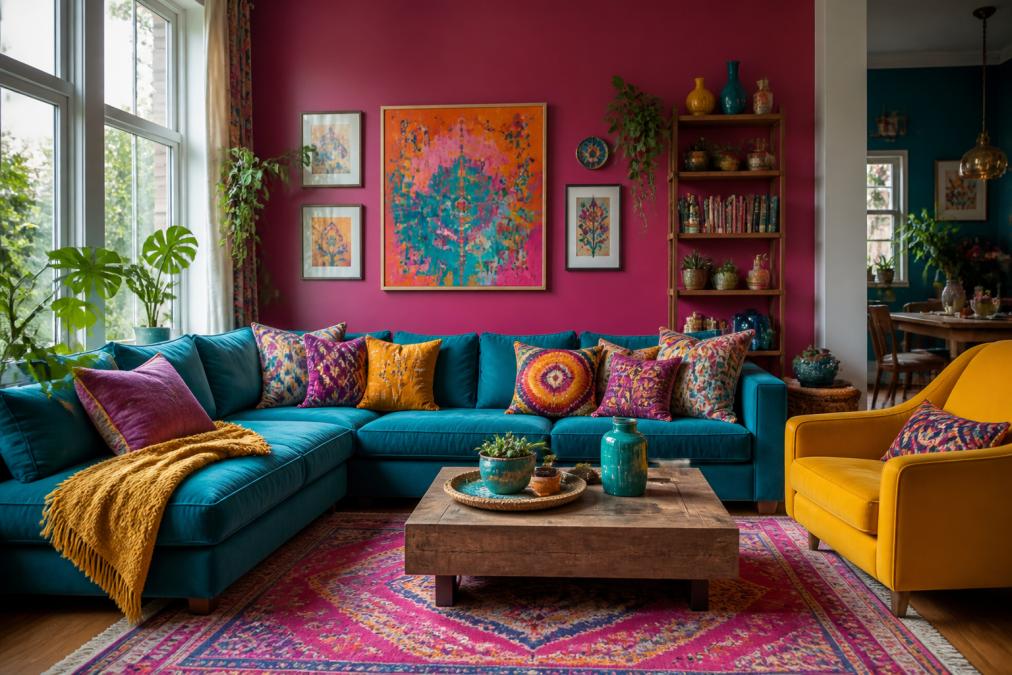
Dopamine decor focuses on items and colors that trigger your brain's reward system. In your living room, pair a jewel-toned accent wall with colorful throw pillows and artwork that genuinely makes you happy, not art you think you should like.
In the bedroom, dopamine decor ideas shift toward calming but joyful elements. A soft, saturated sage or lavender creates peace. Layer textures, chunky knits, linen, soft rugs, that feel good to touch and trigger positive feelings.
Kitchens and dining areas benefit from warm, energizing colors. Open shelving with colorful dishes, cookbooks, or plants brings life. A bright rug or colorful bar stools adds energy.
For home offices, use a soft but saturated color (warm terracotta, dusty coral, or muted teal) paired with plants and meaningful objects to inspire focus and creativity.
Dopamine decor works in every room because it's personal. Each piece should speak to you, whether vintage finds, modern art, colorful books, or handmade items.
Incorporating Bold Colors, Patterns, and Textures
Bold doesn't mean chaotic. Start with your main color, then add patterns that complement it. A saturated jewel tone pairs beautifully with geometric patterns or botanical prints in similar color families.
Textures make mood lifting decor tactile and real. Layering textures, chunky knits, smooth ceramics, soft fabrics, natural wood, makes the space more engaging and inviting.
Keep patterns in the same color family or value range. A teal geometric pattern works with a teal botanical print because they share the color.
Balance saturated colors with breathing room. Use bold color on one accent wall or in key pieces, keeping adjacent walls neutral.
The Role of Nostalgia and Personal Collections
The most joyful spaces include items that mean something to you, a vintage find from your grandmother's house, art from a trip you loved, a book from childhood. These items carry emotional weight and tell your story.
Personal collections become part of your mood lifting decor. Curated collections, vintage ceramics, colorful books, art prints, add personality. Open shelving lets you showcase these pieces.
Nostalgia works because it connects you to positive memories. Seeing something that reminds you of a happy time releases dopamine, which is why nostalgic items lift your mood.
The best collections feel intentional. They share a common thread, color palette, theme, or style. A shelf of vintage teal ceramics and modern teal art prints feels cohesive; random objects feel scattered.
Bringing the Outdoors In with Biophilic Elements
Biophilic design, incorporating natural elements, patterns, and materials into indoor spaces, works because humans evolved in nature. Your nervous system responds positively to natural materials, living things, water, and patterns found in nature. The research is consistent: spaces with biophilic elements reduce stress, improve focus, and boost mood. But most guides assume you have space for large plants and the ability to paint accent walls. Here's how to apply biophilic design in any space, including small apartments and rentals.
Plants and greenery: scaled for real life. Yes, large floor plants make a statement. But a thriving small plant on a shelf, a propagation station on a windowsill, or a hanging plant in a corner works just as well neurologically. The key is that the plant is alive and visible. A struggling plant that you feel guilty about defeats the purpose. Choose plants that match your light and care capacity: low-light tolerant pothos or snake plants for dim corners, succulents for bright windowsills if you forget to water, trailing plants for shelves or hanging spots.
For renters or those without floor space, vertical gardening changes everything. Wall-mounted planters, hanging shelves with small plants, or a tiered plant stand in a corner creates a biophilic focal point without taking up floor space. Even three small plants clustered together create the visual and psychological effect of "bringing nature in."
Natural light maximization in small or dark spaces. If your space doesn't get much natural light, you're working against mood-lifting decor. Maximize what you have: remove heavy curtains or replace them with sheer ones, use light-colored walls and furnishings to reflect available light, position mirrors opposite windows to bounce light deeper into the room. If natural light is genuinely limited, warm-toned lighting (2700K color temperature) mimics sunset and feels more natural than cool white light. Avoid harsh overhead lighting; layer in table lamps and wall sconces instead.
Natural materials in small doses. You don't need a wood accent wall or stone feature. A wooden shelf, a natural fiber rug, a wooden picture frame, or even a wooden cutting board displayed on open shelving brings natural material into your space. Stone coasters, a small piece of driftwood, or a ceramic planter with natural clay finish all count. These materials feel grounding and warm, even in small quantities. In a rental where you can't paint or make permanent changes, natural materials in decor and furnishings are your biophilic anchor.
Water elements adapted for apartments. A full fountain might not fit your space or budget. A small tabletop water feature, a fish tank (even a small betta tank), or even artwork featuring water creates the visual and sometimes auditory benefit of water. The sound of water is neurologically calming, it signals safety and resource availability to your brain. If a physical water feature isn't practical, the visual element alone (a painting of water, a photograph of a lake or ocean) provides some of the psychological benefit.
Natural patterns and textures without renovation. Biophilic design includes patterns found in nature: fractals, branching patterns, organic curves. You don't need to commission custom wallpaper. Artwork featuring natural patterns (botanical prints, landscape photography, abstract pieces inspired by natural forms), throw pillows with leaf or organic prints, or even a tapestry with natural imagery brings these patterns into your space. Layering natural textures, linen, wool, jute, raw wood, unglazed ceramics, creates tactile connection to nature without major investment.
The biophilic approach for small spaces: intentional clustering. Rather than spreading plants and natural elements throughout a small room (which can feel cluttered), create one strong biophilic focal point. A corner with three plants at varying heights, a shelf styled with plants and natural materials, or a window area with plants and natural light becomes a "nature zone" that anchors the room's mood. This approach is especially effective in studios or one-bedroom apartments where every square foot counts.
Biophilic elements that work in rentals. Renters often feel limited in how much they can change their space. But biophilic design doesn't require permanent changes: removable wallpaper with botanical prints, adhesive hooks for hanging plants, area rugs in natural fibers, and furniture with natural materials all create biophilic effect without violating lease agreements. Even rearranging furniture to maximize natural light or creating a plant-filled corner uses what you already have.
At YleaCreations, we offer home decor and art that brings biophilic elements into any space. Our collection is designed to help you create connection to nature, even in small spaces. Shop our collection and discover pieces that ground your space in natural beauty.
Finding Unique Gifts for Daydreamers and Creative Souls
If you're shopping for someone creative or imaginative, unique gifts for daydreamers should feel personal and expressive. Generic items don't land. You need something that reflects their personality and sparks their imagination.
Look for items that encourage creativity or self-expression. Colorful journals, art supplies, interesting books, or unique home decor pieces. The best gifts are ones that make someone think, "This is so me" or "I wouldn't have found this myself, but I love it."
Vintage and handmade items work particularly well for this audience. Mass-produced items feel impersonal. Something made by an artist or found in a vintage shop feels special. It has a story. It's one-of-a-kind or limited edition.
Consider gifts that add color and joy to their space. A vibrant throw pillow, a set of colorful ceramics, or art prints in their favorite colors. For daydreamers, the gift should inspire them to spend more time in their space, creating or imagining.
Apparel and accessories work too. A bold, colorful shirt or a fun accessory that lets them express their personality. Look for pieces with humor, creativity, or artistic design rather than basic solid colors.
At YleaCreations, we specialize in unique gifts for daydreamers, pieces that celebrate creativity, individuality, and joy. From colorful apparel to quirky home decor, our collection is designed for people who want their surroundings and wardrobe to reflect their imaginative spirit.
Shopping Smart: Quality, Authenticity, and Small Creators
When you're building mood lifting decor, quality matters. A piece you love but that falls apart in six months doesn't serve you. Look for items made from durable materials. Check seams, finishes, and construction.
Authenticity also matters. Are you buying from the actual creator or artist, or from a reseller? Direct from creator usually means better quality and fair pricing. It also means your money supports the person who made the thing, not a middleman.
Small creators and independent artists often produce higher-quality, more thoughtful items than mass manufacturers. They care about their work. They use better materials. They stand behind what they make.
When shopping for mood lifting decor, ask these questions:
- Is this made by the person selling it, or is it resold?
- What materials is it made from?
- How is it constructed?
- Does the price reflect the quality and labor involved?
- Do I love this, or do I think I should love it?
Support creators who share your values. If sustainability matters to you, buy from makers who use eco-friendly materials. If you love handmade items, buy from artisans. If you want to support small businesses, choose independent shops over large retailers.
Every piece in our collection is chosen because it genuinely lifts spirits and reflects authentic creativity. When you shop with us, you're bringing home pieces that matter.
| Consideration | What to Look For | Why It Matters |
|---|---|---|
| Quality | Durable materials, solid construction, attention to detail | Pieces last longer and feel better to use |
| Authenticity | Direct from creator, handmade or limited edition | Supports artists and ensures originality |
| Personal fit | Speaks to your taste, not trends | You'll actually love and use it long-term |
| Sustainability | Eco-friendly materials, ethical production | Aligns values with purchases |
| Story | Items with meaning or history | Adds emotional resonance to your space |
Building a space filled with mood lifting decor is one of the simplest ways to improve how you feel every day. It doesn't require a big budget or a design degree. It requires paying attention to what genuinely makes you happy and surrounding yourself with those things.
Start small. Choose one room. Pick one bold color or one special piece. Notice how it makes you feel. Then build from there. Your space should tell your story and lift your spirits. That's the whole point.
Ready to find pieces that reflect your personality and lift your mood? Shop our collection of mood-lifting apparel, art, and home decor on Etsy and discover items created to spark joy and celebrate who you are.
Frequently Asked Questions
What exactly is mood lifting decor and how does it affect my mental health?
Mood lifting decor refers to intentional design choices that boost emotional wellbeing through color, texture, and personal expression. Research in neuro-aesthetics shows that vibrant colors, natural light, and spaces reflecting your personality activate reward centers in the brain, reducing stress and increasing feelings of joy. The key is choosing pieces that resonate with you personally, not generic trends, because emotional resonance is what creates lasting mood improvement.
How do I choose colors for mood boosting without overwhelming my space?
Start with one saturated accent color that makes you feel energized, then build around it with neutrals or complementary shades. Warm colors like coral and golden yellow promote optimism, while deep blues and greens create calm. In small spaces, use bold colors on one wall or through artwork and textiles rather than painting everything. Test colors in natural daylight before committing, since lighting dramatically changes how colors feel emotionally.
Where can I find unique gifts for daydreamers and creative people?
Look for curated collections from independent artists and small creators who design pieces celebrating imagination and individuality. YleaCreations offers an eclectic range of mood-lifting apparel, art, and decor specifically designed for animal lovers and daydreamers, visit their Etsy shop to explore pieces that blend creativity with quality craftsmanship. Choose gifts that reflect the recipient's specific interests rather than generic 'inspirational' items.
How can I afford mood lifting decor on a budget?
Maximize natural light, which is free and instantly uplifting. Thrift vintage finds and curate personal collections that hold nostalgia and meaning. Invest in a few statement pieces from authentic creators, then fill gaps with affordable textiles, plants, and DIY artwork. Focus spending on items you'll see daily, bedding, wall art, lighting, rather than decorative pieces you rarely notice.