 how-to
9 Ways to Style Dog Bandanas for Picture-Perfect Photoshoots
Last Updated: November 1, 2026
Quick Summary
To style a dog bandana for photoshoots, start with a snug, well-fitted bandana that sits flat on the chest, then choose a color that contrasts with both your dog's coat and the background. Tie-on styles give adjustable drape, while collar-slide bandanas stay centered on fidgety dogs. Shoot in soft, even light at eye level so the triangle reads clearly.
- Measure the widest part of the neck with a soft tape and leave room for two fingers.
- Fold a square on the diagonal, roll the long edge, and tie one snug knot at the back.
- Pick two contrasting layers among coat, bandana, and background, and one that ties them together.
- Shoot in open shade or the soft hours after sunrise and before sunset to avoid blown-out fabric.
- Get to eye level so the bandana point sits in frame rather than under the chin.
Table of Contents
- Why a Dog Bandana Instantly Upgrades a Photoshoot
- Start With the Right Fit: A Dog Bandana Size Guide
- How to Tie a Dog Bandana So It Stays Put
- Pick the Best Dog Bandana Colors for Photos
- Fabric Choices That Photograph Well and Feel Comfortable
- 7 Dog Bandana Photoshoot Ideas You Can Copy
- Lighting, Angles, and Framing for Bandana Photos
- Safety and Comfort Checks Before You Shoot
- Troubleshooting Common Photoshoot Problems
- Shop YleaCreations for Your Next Photoshoot Bandana
- Frequently Asked Questions
Why a Dog Bandana Instantly Upgrades a Photoshoot
A dog bandana adds color, shape, and personality to a photo in a way that a plain collar cannot. It frames your dog's face, breaks up a plain coat, and gives the eye somewhere to land. That is why so many dog owners now plan a dog bandana photoshoot around the accessory itself.
Here is the part most guides miss. A bandana does not just decorate your dog. It changes how the whole photo reads. A bright triangle under the chin pulls attention to the face. A patterned fabric adds texture to a flat background. Even a simple tie-on bandana can make a plain backyard look styled.
Below, we break down how to style dog bandanas for photoshoots, from measuring the neck to framing the final shot. The steps are simple, and most take only a few minutes.
Start With the Right Fit: A Dog Bandana Size Guide
Fit comes before style. A bandana that slips, bunches, or hangs too low will ruin every frame, no matter how good the fabric looks.
For a quick neck measurement, wrap a soft tape around the widest part of your dog's neck, just behind the ears and above the shoulders. Leave room for two fingers to slide under. If you want a full walkthrough, our guide on how to measure dog neck for bandanas shows each step.
Measuring Your Dog for a Bandana
- Use a soft tape, not a rigid ruler
- Measure the widest part of the neck, not the base
- Add a little slack so the fabric sits flat
- Recheck the number twice before you buy
Tie-On vs. Collar-Slide Attachment
A tie-on bandana is a square or triangle of fabric that you knot at the back of the neck. It gives you full control over the drape and looks classic in photos.
A collar-slide bandana threads over your dog's existing collar. It stays put with less fuss and suits dogs that dislike knots near the neck.
| Attachment | Best For | Photo Advantage | Watch Out For |
|---|---|---|---|
| Tie-on | Calm dogs, styled shots | Adjustable drape and angle | Can loosen if tied poorly |
| Collar-slide | Fidgety dogs, quick shoots | Stays flat and centered | Limited fabric movement |
Watch out: a bandana that is too tight can pinch the neck, and one that is too loose will slide sideways mid-shot. Check the fit with two fingers before you start.
How to Tie a Dog Bandana So It Stays Put
A tidy knot is the difference between a sharp photo and a messy one. Here is how we tie a dog bandana so it holds through a full shoot.
- Fold the square fabric on the diagonal to form a triangle.
- Roll the long edge a few times to create a clean band.
- Place the band under the neck with the point facing down the chest.
- Bring the ends around and cross them at the back.
- Tie a single snug knot, not a bow that flops.
- Tuck the loose ends under the knot.
- Smooth the point so it sits flat on the chest.
Test the hold by gently tugging the fabric. If it shifts, retie it tighter. A snug knot keeps the triangle centered, which matters when you shoot from an angle.
Pick the Best Dog Bandana Colors for Photos
Color is where a good photo becomes a great one. The best dog bandana colors for photos are the ones that contrast with your dog's coat and the background, not ones that blend into both.
Think in three layers: coat, bandana, background. Pick two that contrast and one that ties them together.
Matching Colors to Coat and Background
- Black or dark coats: warm colors like mustard, coral, or cream pop against dark fur
- White or cream coats: deep teal, navy, or rich red add definition
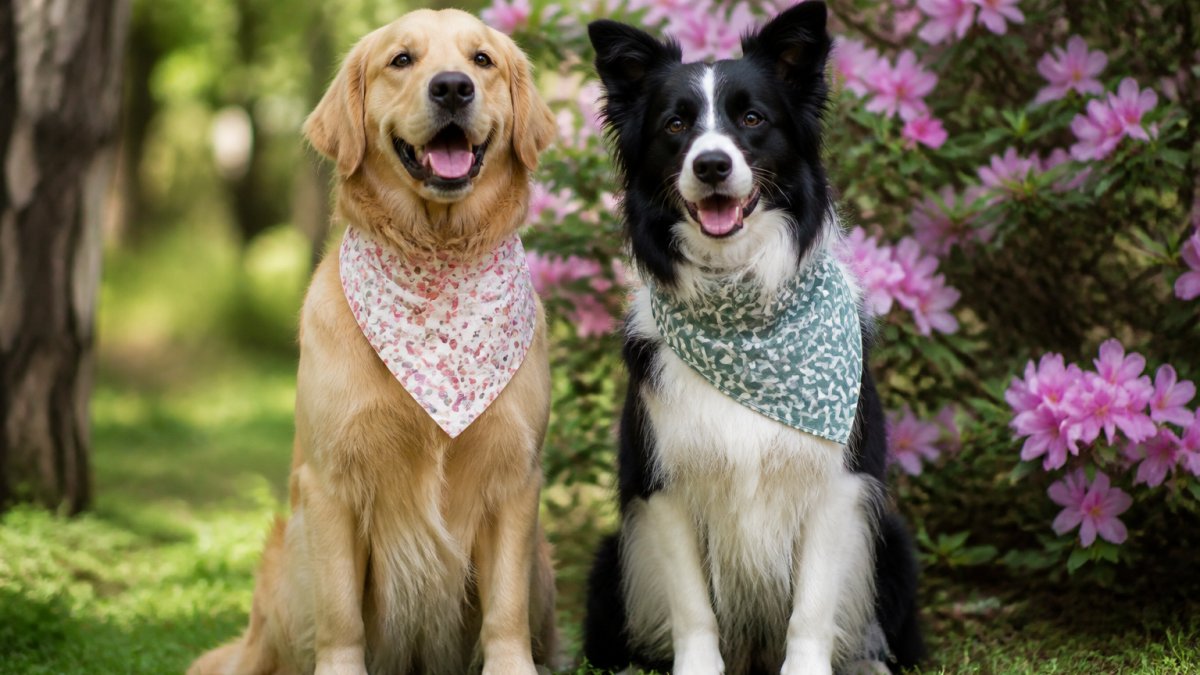
- Golden and tan coats: blue, green, and burgundy create strong contrast
- Brindle or merle coats: solid, bold colors keep the pattern from getting lost
- Busy backgrounds: choose a solid bandana so the pattern does not compete
A quick trick: hold the bandana next to your dog's face in the same light you plan to shoot in. If the color makes the eyes stand out, it works.
Fabric Choices That Photograph Well and Feel Comfortable
Fabric decides how a bandana looks on camera and how your dog feels wearing it.
Avoid stiff, shiny fabrics. They catch light in harsh ways and can look cheap in photos. Soft cotton and cotton blends drape better and stay put.
If you want ideas on building a whole look, our guide to unique dog apparel covers fabric and style picks that photograph well.
- Cotton: holds shape, matte finish, easy to wash
- Cotton blend: soft drape, good for long shoots
- Linen: textured and light, best for summer themes
- Fleece: cozy for cool-weather shots, but can look bulky
Check for scratchy seams or tags near the neck. A comfortable dog holds a pose longer, and that gives you more frames to choose from.
7 Dog Bandana Photoshoot Ideas You Can Copy
Great photos start with a clear idea. These seven dog bandana photoshoot ideas work with one bandana and a phone camera.
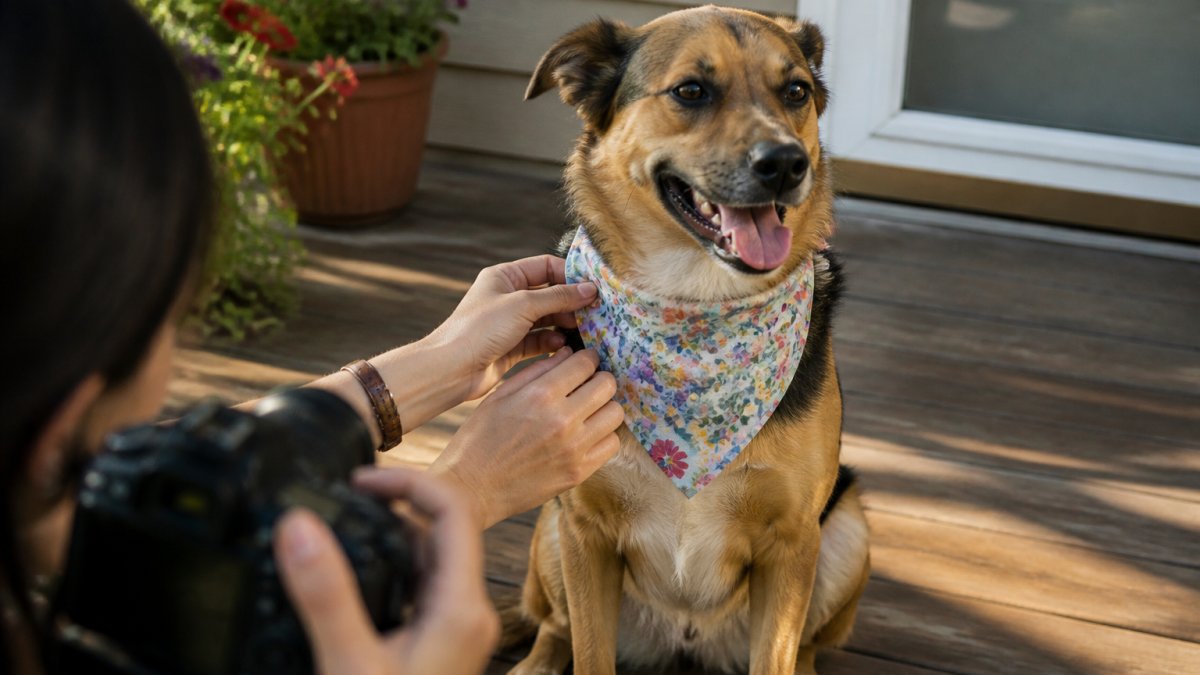
- The classic portrait: dog seated, bandana point centered, shot at eye level.
- The seasonal setup: pumpkins or pinecones around a fall bandana for a themed frame.
- The matching set: pair your dog's bandana with a matching headband for a coordinated look.
- The action shot: toss a toy and catch the bandana mid-flap.
- The close-up: fill the frame with the face and the fabric pattern.
- The flat lay: bandana, leash, and treats arranged on a blanket, dog peeking in.
- The candid: let your dog sniff and wander, then shoot from a low angle.
Each idea takes minutes to set up. Start with the portrait, then work toward the action shots once your dog is warmed up.
Lighting, Angles, and Framing for Bandana Photos
Light and angle do more for a bandana photo than any prop, but most guides stop at "use soft light." The real challenge is making the bandana itself read clearly: no blown-out highlights on light fabric, no distracting shadows across the triangle, and no folds that hide the pattern. Here is how to solve those problems shot by shot.
Light for Fabric, Not Just Faces
Soft, even light shows fabric color and texture without harsh shadows. Shoot in open shade or during the soft hours after sunrise and before sunset. Avoid harsh midday sun, which blows out light fabrics and casts hard shadows across the bandana point.
- Overcast days are ideal for solid colors because they eliminate contrast extremes.
- Open shade (under a tree or beside a building) keeps light even but may cool the color temperature, check your white balance.
- Window light indoors works for close-ups if you turn off overhead lights that create mixed color casts.
- Reflectors (even a white foam board) can bounce light back onto the bandana if your dog's chest falls into shadow.
A common pattern: light fabrics (cream, pastel, white) need slightly underexposed settings to keep detail, while dark fabrics (navy, black, deep red) benefit from a touch more exposure to show texture. Bracket your shots if you are unsure.
Angles That Flatter the Bandana Shape
The bandana point is the visual anchor. If it disappears under the chin or gets lost in fur, the styling work is wasted.
- Eye-level portrait: get down to your dog's eye level so the bandana sits in the frame, not under the chin. This angle shows the triangle's full shape and keeps the knot out of view.
- Slightly above (15-30 degrees): good for full-body shots because it shows how the bandana drapes over the chest and shoulders.
- Straight-on close-up: fill the frame with the face and fabric pattern; this angle works best with solid colors or large-scale prints that do not compete with the eyes.
- Low angle (looking up): dramatic but risky, the bandana point can flip toward the camera and hide the pattern. Use only with stiff fabrics that hold their shape.
For tie-on bandanas, shoot from the side opposite the knot so the loose ends do not distract. For collar-slide styles, a straight-on or slightly angled shot keeps the fabric centered and flat.
Framing Rules for Bandana Visibility
- Keep the bandana point inside the frame, do not crop it at the chest line.
- Leave a little space above the head so the triangle has breathing room.
- Use a plain background to make the color stand out; busy backgrounds compete with patterned fabric.
- Shoot in bursts to catch the best expression and a moment when the fabric lies flat.
- Check the edges: a bandana that slips sideways mid-shot will look off-center in the final frame.
For a creative twist, browse unique expressive art for dog lovers and borrow a color palette for your shoot, then match your bandana to that palette rather than the other way around.
Safety and Comfort Checks Before You Shoot
A safe dog is a happy model, but safety checks go beyond "two fingers under the bandana." Coat type, body size, and your dog's tolerance for accessories all change what "safe" looks like. Run through these checks before you pick up the camera.
Fit Checks by Coat Type and Body Size
- Short-coated dogs (Boxers, Beagles, Pit Bulls): the bandana sits directly against skin, so seams and tags can rub. Turn the bandana so the smooth side faces the neck, and check for redness after five minutes.
- Long-coated dogs (Golden Retrievers, Collies, Shih Tzus): fur can hide the bandana point or push it sideways. Gently brush the chest fur flat before tying, and choose a slightly larger bandana so the triangle clears the fur line.
- Double-coated breeds (Huskies, Shepherds, Newfoundlands): a bandana can trap heat against the undercoat. Keep wear time short in warm weather, and check for panting or restlessness that signals overheating.
- Small breeds (Chihuahuas, Yorkies): a standard bandana can swallow the whole chest. Fold the square smaller or choose a collar-slide style sized to the neck, not the body.
- Giant breeds (Great Danes, Mastiffs): a small bandana looks like a bib. Size up so the triangle covers a proportional area of the chest.
The Two-Finger and Movement Test
- Two fingers fit under the bandana at the neck
- No tags or seams rub the neck
- The knot sits at the back, not the throat
- Your dog can eat, drink, and pant freely
- Your dog can lower its head to sniff the ground without the bandana flipping over its face
- You remove the bandana if your dog paws at it, shakes its head repeatedly, or tries to scratch
Never leave a bandana on an unsupervised dog. Remove it after the shoot, especially around play or chew time.
Accessible Alternatives for Dogs That Dislike Accessories
Not every dog tolerates a tie-on bandana, and forcing one leads to stressed expressions that ruin photos. If your dog resists:
- Collar-slide bandanas thread over the existing collar and stay put with less fuss, no knot near the neck.
- Brief wear intervals: put the bandana on for 30 seconds, treat, remove. Repeat until your dog associates it with rewards, then try a short shoot.
- Prop-based alternatives: place the bandana beside your dog, drape it over a chair, or hold it near the face for a detail shot. You still get the color and pattern without full wear.
- Collar charms or small fabric accents can add a pop of color without a full bandana.
Comfort always beats a perfect pose. A dog that feels free will give you more natural expressions than one distracted by fabric.
When you are ready to shop, our pet accessories include collar-slide and tie-on styles in sizes for small to giant breeds.
Troubleshooting Common Photoshoot Problems
Most photo problems have a fast fix. Here is how we handle the ones that come up most.
- Bandana keeps sliding: retie tighter or switch to a collar-slide style.
- Dog won't sit still: shorten the shoot and use treats between frames.
- Colors look dull: move to softer light and avoid direct sun.
- Fabric looks wrinkled: smooth it flat before each shot.
- Dog seems uncomfortable: stop, remove the bandana, and try a lighter fabric next time.
- Eyes look dark: angle your dog toward the light source.
If your dog dislikes accessories, try a collar-slide bandana or a small fabric accent on the collar instead. Comfort always beats a perfect pose.
Shop YleaCreations for Your Next Photoshoot Bandana
A good bandana does two jobs: it looks great on camera and feels good on your dog. That balance is what we build into every piece at YleaCreations.
Our pet accessories come from a curated, colorful collection made for animal lovers who want their photos to feel like them.
Ready to plan your shoot? Shop our pet accessories and find a bandana that fits your dog and your style.
Frequently Asked Questions
How do you keep a dog bandana in place during a photoshoot?
A secure fit starts with the right size: the bandana should sit comfortably around the neck without slipping over the shoulders. For tie-on styles, use a double knot and tuck the loose ends under the fabric so they don't flap. For collar-slide styles, thread the bandana fully onto the collar before fastening it. A quick comfort check, two fingers should slide under the fabric, tells you it's snug but not tight. If your dog is very active, a collar-slide bandana tends to stay put better than a tie-on.
What size bandana should I get for my dog?
Measure the widest part of your dog's neck with a soft tape, then add about two inches for comfort and knot room. Match that number to the size chart on the product page rather than guessing by breed. A bandana that's too large will droop and cover the chest; one that's too small will ride up. When between sizes, size up for tie-on styles and stay true to measurement for collar-slide styles. Always do a final comfort check before the camera comes out.
What color bandana looks best on a dog in photos?
Contrast is what makes a bandana pop in photos. Light-coated dogs look sharp in deep colors like navy, forest green, or burgundy, while dark-coated dogs stand out in mustard, coral, sky blue, or cream. Consider your background too: a busy floral backdrop calls for a solid bandana, while a plain wall leaves room for patterns. Seasonal themes like fall oranges or summer pastels work well when they echo the setting. Test two or three options in the same light before you commit.
How can I make my dog comfortable wearing a bandana?
Introduce the bandana before the shoot, not on the day. Let your dog sniff it, then put it on for a few minutes at a time with treats and praise, building up to longer wears. Check that the fabric isn't scratching the neck and that the knot isn't pressing on the collar. If your dog freezes, scratches, or tries to pull it off, switch to a lighter fabric or a collar-slide style. Never force it; a relaxed dog photographs far better than a distracted one.
Your next photoshoot deserves a bandana that fits well and shows off your dog's character. YleaCreations offers colorful pet accessories, expressive designs, and a curated collection built for animal lovers. Get started with YleaCreations and give your dog a bandana worth framing.