
 ultimate-guide
Expressive Clothing for Bold Personalities: 2026 Guide
Table of Contents
- What Expressive Clothing Means for Bold Personalities
- The Psychology Behind Bold Fashion Choices
- How to Develop a Signature Style That Feels Like You
- Styling Statement Pieces for Everyday Wear
- Mixing Patterns, Textures, and Color Combinations
- The Benefits of Wearing Unique Artist-Designed Clothing
- Budget-Friendly Expressive Styling and Sustainable Bold Fashion
- Balancing Bold Fashion Choices in Professional Settings
- Frequently Asked Questions
Last Updated: September 13, 2026
What Expressive Clothing Means for Bold Personalities
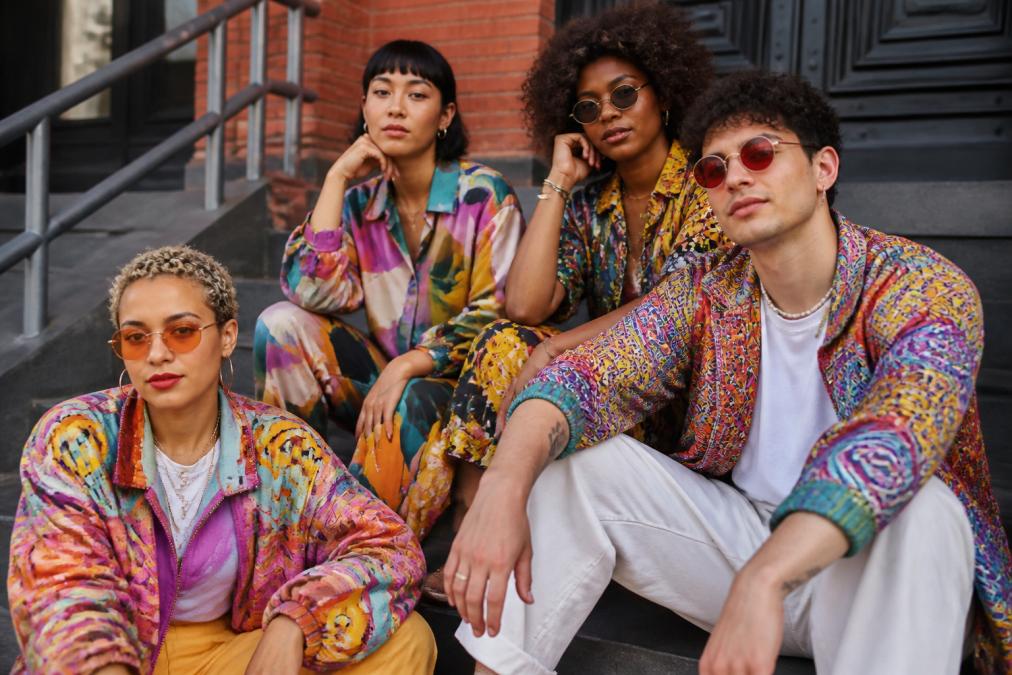
Expressive clothing is apparel chosen specifically to communicate identity, mood, and values before a single word is spoken. For bold personalities, it turns getting dressed into a daily act of visual storytelling rather than a routine of blending in.
This guide from YleaCreations explores how to build a wardrobe that actually sounds like you. We have spent years curating colorful, mood-lifting pieces for animal lovers, daydreamers, and people who refuse to dress like the background, so we know the difference between loud for its own sake and loud with intention.
The distinction matters. Expressive clothing for bold personalities is not about wearing the most attention-grabbing item in the room. It is about wearing the item that says the most accurate thing about you.
Below, we break down the psychology, the practical styling moves, and the budget-friendly paths into a wardrobe that feels unmistakably yours.
The Psychology Behind Bold Fashion Choices
Clothing functions as non-verbal communication, and research into fashion psychology consistently finds that what we wear shapes both how others perceive us and how we perceive ourselves. That feedback loop is why a bold shirt can genuinely change the tone of a day.
Dressing with dramatic flair is a form of self-signaling. When you choose unconventional silhouettes or bold graphics, you are reminding yourself who you are before you walk into the room. That internal cue often shows up externally as confidence.
The flip side is worth naming: many people avoid expressive clothing because they fear judgment. A common mistake is assuming bold style requires an extroverted personality. It does not. Introverts frequently gravitate toward high-impact fashion precisely because the clothing does the talking for them.
How to Develop a Signature Style That Feels Like You
A signature look is a repeatable formula, not a single outfit. The most reliable way to develop one is to audit what you already reach for, then build around those patterns deliberately.
Here is a practical process:
- Pull out the five pieces you wear most often. Note the colors, cuts, and textures they share.
- Identify one or two elements that make you feel most like yourself. It might be a color combination, a graphic style, or a specific fit.
- Choose three wardrobe staples that anchor everything else, such as a well-fitting neutral pant, a solid base layer, and a jacket that works across seasons.
- Add expressive pieces that share your identified elements so they coordinate automatically.
- Test the formula for two weeks and note which combinations you repeat.
The goal is a curated wardrobe where every bold piece has something to pair with. When your pieces coordinate by design, getting dressed stops being a decision and becomes an instinct.
That is the real difference between a closet full of statement pieces and a signature style: one is a collection, the other is a system.
Styling Statement Pieces for Everyday Wear
The everyday styling rule that works most reliably is to let one piece lead and keep everything else quiet. Statement pieces do not need competition; they need contrast.
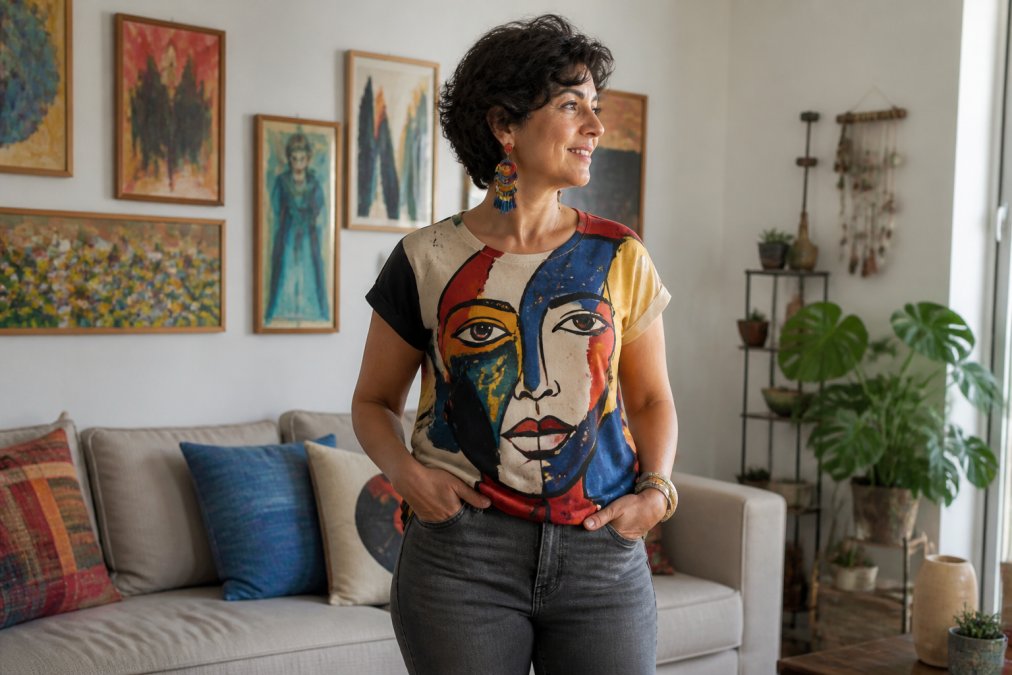
A bold graphic tee over straight-leg denim and plain sneakers reads as intentional. The same tee under a blazer with tailored trousers reads as editorial. The piece did not change; the supporting cast did.
Practical combinations that hold up in daily life:
- Bold top, neutral bottom, one accessory that echoes a color from the top
- Neutral base layers with one unconventional silhouette on top, such as an oversized jacket
- Patterned piece paired with a solid in the same color family
- Expressive textile, like a textured knit, against smooth basics
What most guides miss is that statement pieces work harder in small wardrobes. If you own fewer items, each one needs to carry more weight, which means buying fewer, bolder pieces beats buying many forgettable ones.
Mixing Patterns, Textures, and Color Combinations
Pattern mixing succeeds when the patterns share something: a color, a scale logic, or a mood. Random mixing looks accidental; deliberate mixing looks like a point of view.
The most forgiving approach is to vary scale. Pair a large geometric print with a small, tight pattern, such as wide stripes with fine dots. When two patterns are the same size, they compete. When they differ in scale, they complement.
Texture mixing follows a similar logic. Combining expressive textiles like chunky knits, corduroy, or raw linen with smooth fabrics adds depth without adding visual noise. A textured sweater over a smooth skirt does more than two smooth pieces ever will.
For color combinations, the reliable frameworks are:
- Analogous: colors next to each other on the color wheel, which reads as cohesive
- Complementary: opposite colors, which reads as high-energy
- Triadic: three evenly spaced colors, which reads as playful and deliberate
If you are new to bold color, start with one saturated color against neutrals. As your eye develops, add a second. The mistake is going from all-neutral to five-color maximalism in one purchase.
The Benefits of Wearing Unique Artist-Designed Clothing
Artist-designed clothing carries a story that mass-produced graphics cannot. When a design comes from an actual creator rather than a template, the piece holds meaning beyond its function.
That meaning is the core benefit. A shirt featuring hand-drawn animal art does more than cover your torso; it signals a specific interest, a sense of humor, and a set of values. For people who care about authenticity in what they own, that distinction is the whole point.
There is also a practical benefit: uniqueness. Artist-designed pieces are produced in smaller runs, so you are far less likely to see your exact item on three other people at the same event. That rarity is a quiet form of personal branding.
At YleaCreations, every design starts with that idea, that a piece of clothing should be a mood-lifting reminder of what you love, whether that is a dog, a daydream, or a color you cannot stop looking at. Our collection spans apparel, art, and pet accessories built around personal expression rather than passing trends.
If you have ever worried that buying from a small creator means lower quality, the honest answer is that it depends on the maker, and you should look for transparency about who designs and produces the work. That question is fair to ask of any brand.
Budget-Friendly Expressive Styling and Sustainable Bold Fashion
Most guides treat bold style as a spending category. It is not. Bold style is a decision-making category, and the shoppers who get the most expressive wardrobes for the least money are the ones who understand two numbers: cost per wear and replacement rate.
Cost per wear is simple. Divide what you paid by how many times you actually wore it. A $60 statement jacket worn twice a week for a year lands under a dollar per wear. A $15 graphic tee worn once lands at $15 per wear. The cheap item was the expensive one. This is the single most useful filter for expressive shopping, because bold pieces are exactly the items people buy on impulse and then never wear.
Replacement rate is the second number. Fast-fashion graphics fade, crack, and pill within a season or two, which means you rebuy the same category repeatedly. A well-made expressive piece that survives three years of regular wear replaces three to five cheap versions of itself. That is the entire sustainability argument in one sentence, and it is also the entire budget argument.
Where to actually find affordable bold pieces
- Thrift and consignment. Vintage is where pattern, texture, and color already exist in abundance, often at a fraction of retail. The trade-off is sizing inconsistency and one-of-one inventory, so go in with a color palette in mind rather than a specific item.
- Small creators selling direct. Buying straight from the maker usually cuts out retail markup. You can also ask directly about materials and production, which is the transparency question that matters most.
- DIY and embellishment. Adding patches, embroidery, or a dye job to a plain base layer is the cheapest route to a genuinely unique piece. The trade-off is time and the risk of a failed experiment, so practice on a garment you already own before altering something new.
- Accessories as multipliers. A bold bag, a graphic pin, or statement earrings can shift a neutral outfit into expressive territory for a fraction of the cost of a new garment. This is the highest-leverage spend in an expressive wardrobe.
The sustainability mechanism most guides skip
The environmental case for expressive clothing is not about buying 'green' labels. It is about slowing the rate at which clothing moves through your closet. Three behaviors do most of the work:
- Wear what you own more often. The most sustainable garment is the one already hanging in your closet.
- Repair before replacing. A re-sewn seam or replaced button extends a piece by years, and visible mending can itself become an expressive detail.
- Buy pieces that coordinate by design. A small, deliberate palette means every new piece multiplies the outfits you can build, which reduces the urge to buy more.
A common pattern among people who dress boldly on a budget is that they own fewer items than average but wear a higher percentage of them. The wardrobe is smaller and the outfits are more varied, because each piece was chosen to work with the others.
At YleaCreations, that principle shapes how we build our collection, colorful animal art, mood-lifting apparel, and accessories designed to coordinate with what you already own rather than replace it. You can browse the full range at our store and see how the pieces pair across categories. Shop on Etsy.
Balancing Bold Fashion Choices in Professional Settings
The professional-versus-personal expression problem is the single most common reason people abandon bold style. They buy the piece, love it on the weekend, and then never wear it to work, which means it gets worn a fraction as often as it should. Solving this is not about toning yourself down. It is about translating your style into a different dialect.
The useful framework is what stylists often call the anchor-and-accent approach. Every professional outfit gets one anchor (the piece that fits the room's baseline) and one accent (the piece that is unmistakably you). The anchor earns you permission; the accent spends it. Get the ratio right and you read as polished and distinctive at the same time.
Reading the room before you dress for it
Workplace dress expectations sit on a spectrum, and the same bold piece lands differently across it:
- Formal or client-facing environments. The anchor is a tailored jacket, a structured dress, or a clean button-down. The accent is color, a distinctive accessory, or an unexpected shoe. Bold graphics and unconventional silhouettes usually read as out of place here, not because they are wrong, but because the room's baseline is doing different work.
- Business casual. The anchor is a well-fitting pant and a solid base layer. The accent can be a patterned blazer, a bold knit, or a graphic piece layered under something structured. This is the widest band, and where most expressive wardrobes live.
- Casual or creative workplaces. The anchor can be as simple as clean denim. Almost anything else is fair game, including full graphic pieces and unconventional silhouettes.
The mistake is treating these as rules to obey rather than baselines to work against. The goal is never to disappear into the dress code. It is to be the person whose style is memorable without being a distraction from the work.
The three strategies people actually use
Most people who successfully combine bold style and professional life settle into one of three patterns:
- The signature accessory. One distinctive element, a bold pin, a specific color, a piece of jewelry, travels from weekend to workday. It becomes your visual signature and requires almost no calibration.
- The split wardrobe. Boldest pieces stay off-hours; workwear stays closer to neutral. This is the safest approach and the one most people default to, but it means your expressive pieces get worn less often.
- The graduated approach. You start closer to the room's baseline and add one expressive element at a time over weeks. Colleagues calibrate to your style gradually, and the line between memorable and distracting moves on its own.
The graduated approach is the one that tends to produce the most satisfying long-term result, because it lets you find your actual ceiling rather than guessing at it. Going fully maximalist on day one in a new environment rarely ends well, not because the style is wrong, but because you have not yet earned the context to support it.
What to do when you are unsure
Ask yourself one question: if a colleague described my outfit to someone who was not there, what would they say? If the answer is 'a really cool jacket' or 'that color,' you are calibrated. If the answer is 'I could not focus on the meeting,' you have overshot. That is the whole test, and it works in every environment.
Frequently Asked Questions
What defines a bold fashion personality?
A bold fashion personality is someone who uses clothing as a form of self-expression rather than just utility. They gravitate toward statement pieces, unconventional silhouettes, and bold graphics that reflect their individuality. Bold dressers often treat their wardrobe as visual storytelling, mixing colors and textures that communicate their mood, values, and creative identity without saying a word.
How can I incorporate more expressive pieces into my daily wardrobe?
Start with one statement piece per outfit, like a graphic tee or a patterned jacket, and build the rest of your look around it using neutral wardrobe staples. Rotate bold accessories such as scarves, pins, or jewelry into your existing outfits first. Over time, you can introduce unconventional silhouettes or expressive textiles as your confidence grows.
How do you balance bold fashion choices with professional settings?
Choose one focal point and keep everything else understated. A colorful blouse with tailored neutral trousers, or a bold accessory with a simple dress, reads as polished rather than chaotic. Check your workplace dress code first, then use color combinations, texture mixing, or subtle geometric prints to express personality within those boundaries.
What are the benefits of wearing artistic, independent-designed apparel?
Artist-designed clothing offers a level of individuality that mass-produced fashion cannot match. You get unique designs, often produced in smaller batches, which means fewer people own the same piece. Many independent creators also use higher-quality materials and ethical production methods. Wearing artist-designed apparel supports small creators and gives you a signature look that reflects your authentic style.