
 ultimate-guide
Why Choose Independent Artist Apparel
Table of Contents
- The Rise of Independent Artist Apparel in the Streaming Era
- Direct Support for Creators: How Your Purchase Fuels the Creator Economy
- Visual Branding That Tells Your Story
- Quality Craftsmanship vs. Mass Production
- Sustainable Fashion Choices for Expressive Individuals
- How to Style Artistic Apparel for Your Personal Brand
- Building Tribal Community Through Limited Edition Designs
- The Psychological Badge of Honor Effect
- Finding Authentic Independent Artist Apparel
- Conclusion
- Frequently Asked Questions
Last Updated: September 20, 2026
The Rise of Independent Artist Apparel in the Streaming Era
The apparel you wear tells a story. For decades, mass manufacturers wrote that story, the same designs in thousands of stores, the same silhouettes repeating across crowds. But artists began selling directly to fans, and fans realized they could wear something that actually meant something to them. Independent artist apparel has become the uniform of people who refuse to blend in, who want their clothing to reflect who they actually are.
When you choose independent artist apparel, you're making a statement about what you value. At YleaCreations, we've watched this transformation firsthand as independent creators have fundamentally changed how people think about what they wear and why.
The streaming era accelerated this trend. Artists no longer need traditional gatekeepers. They can build audiences directly, sell directly, and create apparel that speaks to their exact vision. The result: clothing that carries genuine creative intent rather than focus-grouped compromise.
Direct Support for Creators: How Your Purchase Fuels the Creator Economy
When you buy from an independent artist, your money goes directly to the creator, not to middlemen or distribution networks. This direct relationship is the foundation of the creator economy.
Many creators rely on apparel sales as a meaningful revenue stream. A single purchase can fund studio time, better equipment, or keep a creative practice alive. You're reinforcing a market where creativity is valued and people can make a living doing what they love.
Traditional retail takes cuts at every step: manufacturer, distributor, retailer. Independent artist apparel collapses those layers, so more of your purchase reaches the creator. Artists can price fairly without massive markups, giving you better value and creators better compensation.
Supporting the creator economy means supporting diversity of vision. Mass manufacturers optimize for broad appeal; independent artists optimize for authenticity. Your purchase directly enables creative freedom.
Visual Branding That Tells Your Story
Every piece of independent artist apparel carries a visual language, communication that says something about your aesthetic identity and values.
When you choose apparel designed by an independent artist, you're choosing a specific visual perspective. The graphic design carries intention and reflects the creator's unique sensibility.
A mass-produced animal shirt hits familiar notes; an artist-designed version has specificity, a particular illustration style, unique color palette, details that reveal personality. You're wearing authentic creative vision, not a demographic target.
When you wear independent artist apparel, you signal membership in a community that appreciates that creator's work, a badge of taste and shared values.
Independent artist apparel lets you choose what resonates with you, creating stronger alignment between your taste and personal brand.
Quality Craftsmanship vs. Mass Production
Fabric Quality and Weight
Mass production optimizes for cost, using lightweight synthetics or thin cotton blends (4.0-5.0 oz/sq yd). Printing prioritizes speed over aesthetics. The result is functional but thin clothing that loses color quickly and wears out within a season or two.
Independent artist apparel typically uses higher-quality blanks (6.0-7.0 oz/sq yd of 100% cotton or premium blends). This weight difference is tangible: heavier fabric holds its shape, resists pilling, and feels substantial.
GSM (grams per square meter) measures fabric density. Mass retail uses 130-150 GSM; quality independent artist apparel uses 180-220 GSM for better hand-feel and longevity. Check product pages for fabric content and weight.
Printing Methods and Durability
How a design is applied affects longevity. Mass production uses rotary screen printing or heat-transfer methods optimized for speed, which can crack, fade, or peel after 20-30 washes.
Independent artists choose printing methods based on design and durability goals:
- Screen printing: Durable and vibrant, lasting 50+ washes, but requires setup for each color.
- Direct-to-garment (DTG): Allows full-color designs, lasting 30-40 washes with proper care.
- Embroidery: Tactile and durable, lasting indefinitely, but expensive per unit.
Many independent artists disclose their printing method because it affects the product's character and care requirements. This transparency is rare in mass retail.
Stitching and Construction
Mass-produced apparel uses high-speed sewing with single-stitched seams and cheaper thread that weakens over time.
Quality independent artist apparel features double-stitched seams, reinforced stress points, and higher-quality thread, the difference between a shirt lasting three years versus ten.
The Longevity Equation
A shirt made from 200 GSM fabric, screen-printed with quality inks, and double-stitched will outlast a mass-produced equivalent by 3-5 times. This longevity compounds the value: you pay less per wear over the garment's lifetime.
Independent artists include detailed care instructions because pieces are designed to last. Mass retail assumes seasonal replacement, so care instructions are often generic or missing.
Sustainable Fashion Choices for Expressive Individuals
Sustainable fashion starts with buying less and choosing better. Independent artist apparel aligns with this principle, and understanding production mechanics helps you make responsible choices.
Production Method: Print-on-Demand vs. Small-Batch Manufacturing
How apparel is produced has enormous environmental implications, and independent artists use different models than mass retail.
Print-on-demand (POD) manufactures items only when ordered, eliminating overproduction. Mass retail wastes an estimated 30% of apparel in landfills or incineration.
POD reduces transportation waste by shipping directly to customers instead of through distribution networks.
POD typically uses thinner blanks than small-batch production, but quality POD services now offer 6.0+ ounce blanks and quality screen printing.
Small-batch manufacturing produces 50-500 units at once, allowing higher-quality blanks and sophisticated printing techniques.
Small-batch production has higher per-unit environmental cost, but if apparel lasts 5-10 years instead of 2-3, lifetime impact is lower.
Neither method is universally "better", it depends on the artist's scale, the design complexity, and the intended durability of the piece.
Material Sourcing and Ethical Production
Many independent artists prioritize ethical production because they know their manufacturers and understand their supply chains. This transparency is rare in mass retail, where supply chains are opaque and accountability is diffused across dozens of middlemen in different countries.
Common ethical considerations independent artists evaluate:
- Organic or sustainably grown cotton: Reduces pesticide use and water consumption. Look for certifications like GOTS (Global Organic Textile Standard) or Fair Trade.
- Labor practices: Independent artists often work with manufacturers that offer fair wages and safe working conditions. Some specifically seek out domestic or local production to reduce transportation and support local economies.
- Dye and chemical processes: Conventional textile dyeing is water-intensive and often uses toxic chemicals. Some independent artists use low-impact dyes or natural dyes, which reduce environmental harm.
- Recycled or upcycled materials: Some artists incorporate recycled polyester or deadstock fabric, reducing waste.
These choices typically increase the cost per garment, which is why independent artist apparel often costs more than mass retail. But the premium reflects actual environmental and ethical considerations, not just branding.
Care and Longevity as Sustainability Practice
The most underrated aspect of sustainable fashion is wearing what you own for as long as possible. Independent artist apparel often comes with detailed care instructions because the creator wants you to keep the piece looking good, and because they understand that longevity is the ultimate sustainability metric.
Proper care extends garment life significantly:
- Wash in cold water: Reduces fading and extends fabric life. Hot water weakens fibers and causes colors to bleed.
- Turn inside out before washing: Protects the printed or embroidered design from friction and fading.
- Use gentle detergent: Harsh chemicals break down fibers. Look for detergents labeled "gentle" or "delicate."
- Air dry when possible: Heat from dryers damages fabric and causes shrinkage. Line drying or flat drying preserves garment integrity.
- Store properly: Fold rather than hang heavy pieces to prevent stretching. Keep in a cool, dry place away from direct sunlight.
A shirt cared for properly can last 5-10 years instead of 2-3. This single behavior shift, actually caring for what you own, is one of the most effective sustainability practices available, and it's built into the independent artist apparel model.
The Intention Factor
Ethical consumption doesn't require perfection. It requires intention. When you buy independent artist apparel, you're making a choice that reflects your values: supporting creators directly, choosing quality over quantity, and thinking about where your clothes come from and who benefits from your purchase.
This intentionality extends to how you wear and care for the piece. You're more likely to wear apparel you genuinely connect with repeatedly, less likely to treat it as disposable, and more likely to invest in keeping it looking good. These behaviors compound the sustainability benefit far beyond the production method or material sourcing.
At YleaCreations, we offer a curated collection of unique gifts, apparel, art, and pet accessories designed to reflect your personal style and spirit. Explore our vibrant world and find the perfect, expressive addition to your space or wardrobe. Shop on Etsy.
How to Style Artistic Apparel for Your Personal Brand
Wearing independent artist apparel effectively means treating it as a statement piece rather than background clothing.
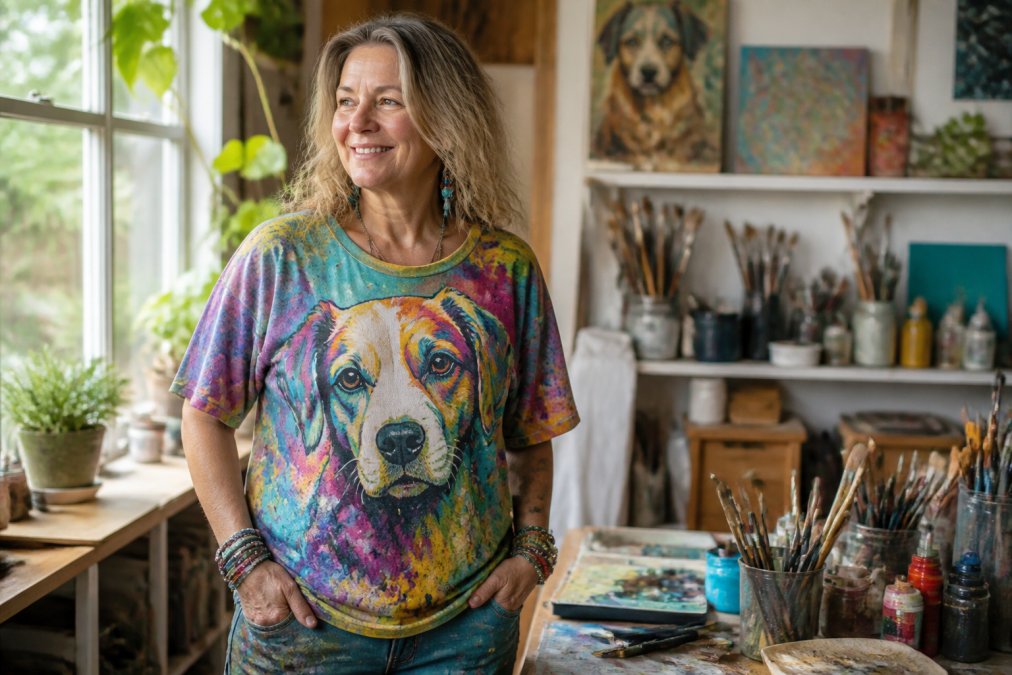
The strongest approach is to let the apparel be the focal point. If the design is bold and colorful, pair it with neutral bottoms and minimal accessories. If the design is detailed, give it space to breathe. Avoid competing patterns or loud colors that fight for attention.
Personal style becomes an extension of the design itself. If you're wearing a piece with whimsical animal art, lean into that aesthetic with your accessories. Playful shoes, interesting jewelry, or a thoughtful hat can amplify the statement. The goal is coherence, everything working together to express a unified vision.
Layering works well with independent artist apparel. A graphic tee under an open shirt or jacket creates depth and sophistication. It also lets you adjust the boldness of the statement depending on context. At a casual gathering, wear it solo. In a more formal setting, layer it.
Consider the occasion and your audience, but don't overthink it. The people worth impressing are those who appreciate authentic self-expression. If you love the design, wear it with confidence. That confidence is what makes any outfit work.
Building Tribal Community Through Limited Edition Designs
Limited edition designs create scarcity, and scarcity creates connection. When an artist releases a limited run, everyone who owns that piece is part of a smaller group. They're not just fans, they're members of something exclusive.
This tribal community aspect is powerful. Fans recognize each other. They share a specific aesthetic identity. They understand that everyone in that tribe made an intentional choice to be there. This builds stronger bonds than mass-market clothing ever could.
The limited-edition model also reflects how independent artists actually work. They can't produce infinite quantities. They release designs in batches, and when they're gone, they're gone. This scarcity is real, not manufactured. It gives the apparel genuine collectible value.
Many independent artists rotate designs seasonally or create one-time releases. This keeps fans engaged and coming back. It also means that wearing a piece from a past release signals deep fandom. You didn't just grab the current design, you were there early enough to catch something no longer available.
Community building through apparel extends beyond ownership. Fans wearing the same designs connect online, share how they style the piece, tag the artist, create art inspired by the design. The apparel becomes a hub for community activity.
For artists, this tribal loyalty creates stability. A core group of dedicated fans provides consistent support, which allows for better planning and more ambitious creative projects. For fans, it creates belonging. You're not just a customer, you're part of something.
The Psychological Badge of Honor Effect
Wearing independent artist apparel carries psychological weight. It signals taste, cultural awareness, and support for authentic creativity. This isn't vanity, it's a legitimate form of social signaling.
When you wear a piece of independent artist apparel, you're making a statement about your values. You're saying: "I support artists. I value creativity. I choose authenticity over convenience." People read these signals, consciously or unconsciously. They form impressions based on what you wear.
This badge of honor effect is stronger with independent artist apparel than mass retail because the choice is more deliberate. Wearing a mainstream brand is default. Wearing independent artist apparel is a choice. That choice carries meaning.
The psychological benefit flows in both directions. Wearers feel more connected to their clothing because it represents their values. Creators feel validated knowing that people are choosing to represent their work. Both sides experience a sense of pride that mass-market transactions rarely generate.
There's also an element of courage in wearing something visually distinctive. Mass clothing lets you blend in. Independent artist apparel makes you visible. For people who want to express their personality boldly, this is a feature, not a bug. The apparel becomes a form of self-advocacy.
Finding Authentic Independent Artist Apparel
Not everything labeled as independent artist apparel actually comes from independent artists. Some retailers use the term loosely, selling designs created by in-house teams or licensed from larger sources.
Authentic independent artist apparel comes directly from the creator or through platforms explicitly designed to connect artists with customers. Look for clear artist attribution. The creator's name should be visible, and you should be able to find their other work easily.
Check the artist's story. Real independent artists have a voice. They talk about their process, their inspiration, their vision. They engage with customers. If you can't find any of this information, the apparel probably isn't from an independent creator.
Platforms matter. Some marketplaces prioritize independent creators and verify artist identity. Others are open to anyone and harder to navigate. YleaCreations curates independent artist work specifically, making it easier to find authentic pieces from creators who share our values around artistic expression and quality.
Direct artist websites are often the most authentic source. You're buying straight from the creator, and you can see their full body of work. You can read their story. You can understand their creative vision. This direct connection is part of what makes independent artist apparel special.
Reviews and customer feedback matter too. Real independent artists typically have engaged customers who leave detailed reviews. They'll mention the quality, the accuracy of colors, the fit, the shipping. Authentic feedback is specific. Generic praise or complaints are a red flag.
Conclusion
Independent artist apparel represents a fundamental shift in how people think about clothing. It's no longer just functional, it's a vehicle for supporting creativity, expressing identity, and building community. When you choose independent artist apparel, you're making a choice that benefits the creator, aligns with your values, and gives you clothing that actually means something.
The quality difference is real. The creative authenticity is real. The community connection is real. These aren't marketing angles, they're the actual reasons people choose independent artist apparel over mass-produced alternatives.
Ready to find pieces that genuinely reflect who you are? Shop on Etsy at YleaCreations and discover artist-designed apparel that celebrates your unique personality and supports independent creators directly. Browse our curated collection of colorful, expressive pieces designed to lift your mood and reflect your authentic self.
| Aspect | Independent Artist Apparel | Mass-Produced Apparel |
|---|---|---|
| Creator Compensation | Direct to artist | Distributed across middlemen |
| Design Authenticity | Artist's original vision | Market-tested, focus-grouped |
| Quality Standards | Craftsmanship-focused | Cost-optimized |
| Community Connection | Tribal, engaged fans | Anonymous consumers |
| Sustainability | Often ethical, made-to-order | High waste, overproduction |
| Uniqueness | Limited editions, specific runs | Mass quantities, widely available |
Frequently Asked Questions
What makes independent artist apparel different from mass-produced fashion?
Independent artist apparel is created by individual designers who control the entire design process, from concept through production. Mass-produced clothing prioritizes volume and profit margins, often sacrificing uniqueness and quality. Artist-designed pieces reflect original artwork and personal vision, typically produced in smaller batches with greater attention to detail. You're buying a direct connection to creative output rather than a generic garment manufactured by faceless corporations.
How does buying from independent artists support the creator economy?
When you purchase independent artist apparel, a significantly larger percentage of your money goes directly to the creator compared to traditional retail. This direct support enables artists to sustain their creative careers, invest in better materials and production methods, and continue developing new work. Independent creators often reinvest earnings into their craft, expanding their artistic practice and building sustainable livelihoods. Your purchase becomes an act of patronage that fuels the creator economy.
Is independent artist apparel actually more sustainable than fast fashion?
Independent artist apparel typically offers more sustainable practices than fast fashion in several ways. Limited-run production reduces overstock and waste, and many independent creators prioritize ethical sourcing and quality materials designed to last. Small-batch production requires fewer resources than mass manufacturing, and direct-to-consumer models eliminate unnecessary shipping and intermediaries. However, sustainability varies by creator, so look for transparency about materials, production methods, and care instructions to ensure your purchase aligns with your values.
How can I be sure I'm buying from an actual independent artist and not a reseller?
Look for creators who share their design process, explain their artistic vision, and provide transparency about production methods. Authentic independent artists typically display original artwork, maintain consistent aesthetic identity across their collections, and engage directly with customers. Check for detailed product descriptions, care instructions, and information about materials. Visit their portfolio or social presence to verify they're creating original work rather than reselling designs from other sources. Platforms that feature independent creators often verify authenticity, and creators themselves are usually eager to discuss their work.